August 9, 2026 • Declan Marsh • 10 min reading time • Prices verified June 11, 2026
First Lens After the Kit: Choosing a Prime for Fujifilm X-Mount Under $200
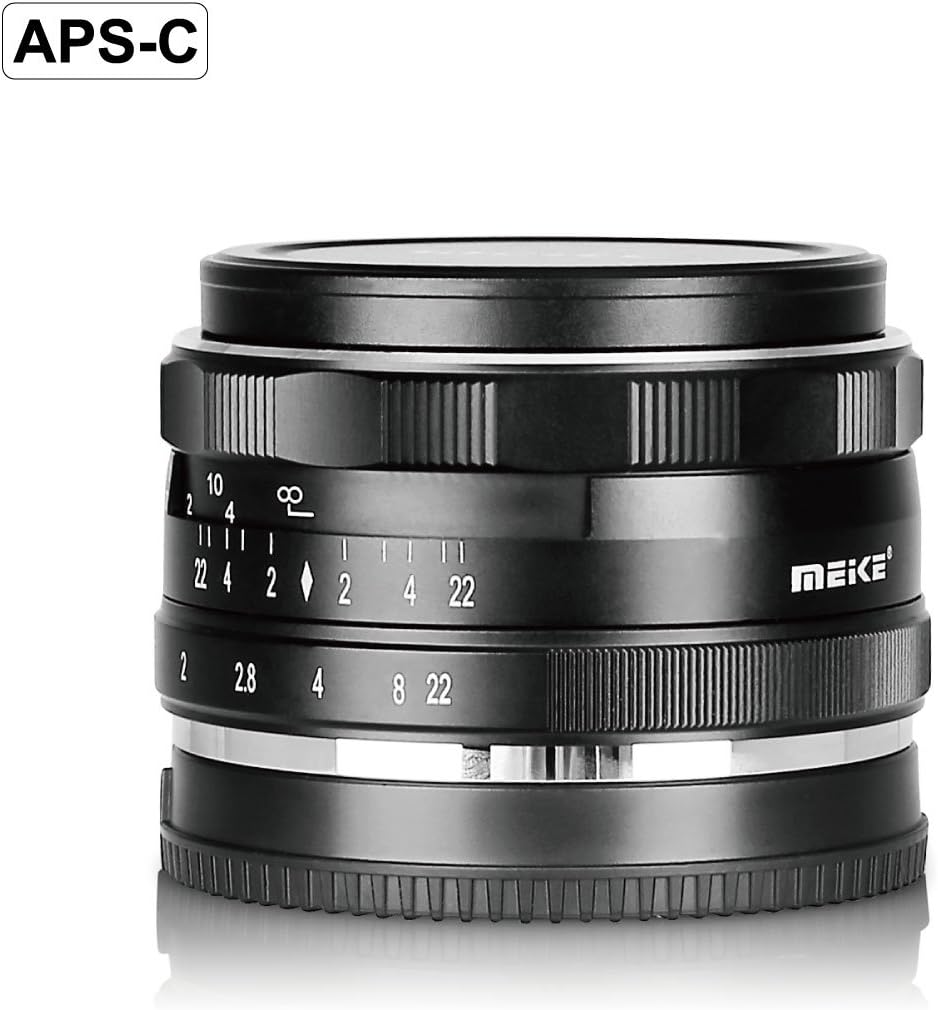
If you bought a Fujifilm camera — say, an X-T30 II or an X-S20 — it probably came with a kit zoom lens, typically an 18–55mm or 15–45mm zoom that covers a wide range of focal lengths. That versatility is useful when you’re starting out, but zoom lenses have a physical limitation: to cover all those focal lengths, they use a more complex optical design that usually results in a smaller maximum aperture (the opening that lets light in). A prime lens, by contrast, covers only one focal length but can offer a much wider aperture — which means sharper subject separation, better low-light performance, and often a more compact body. For Fujifilm X-mount shooters, there’s genuine good news: a cluster of well-regarded primes now live under the $200 mark, and sorting through them is exactly what this guide is for.
You’re not choosing between bad options here. You’re choosing between different tradeoffs — autofocus reliability, focal length feel, build quality, and the manual-vs-auto experience. Let’s work through each one so you leave with a clear decision.
The Contenders: What’s Actually Worth Considering Under $200
Four lenses consistently surface in this price band with enough owner data to form real opinions. Here’s the short version before we go deeper.
By the numbers:
| Lens | Focal Length (equiv. FF) | Max Aperture | AF | Street Price (May 2026) |
|---|---|---|---|---|
| Viltrox 23mm f/1.4 AF | ~35mm | f/1.4 | Yes | ~$159 |
| Viltrox 35mm f/1.7 AF | ~53mm | f/1.7 | Yes | ~$149 |
| TTArtisan 27mm f/2.8 AF | ~41mm | f/2.8 | Yes | ~$109 |
| Meike 35mm f/1.7 | ~53mm | f/1.7 | Manual only | ~$65 |
| Viltrox 28mm f/4.5 pancake | ~43mm | f/4.5 | Yes | ~$149 |
Prices sourced from aggregated retail listings as of publication. Expect minor fluctuation.
The Viltrox 35mm f/1.7 is our top pick for most buyers in this bracket. The TTArtisan 27mm is the smart runner-up if you want a slightly wider field of view and can tolerate a firmware caveat. The Meike 35mm f/1.7 earns a narrow but real recommendation as a deliberate-shooter or beginner-gift option. The Viltrox 28mm pancake is a legitimate choice for compact-body pairing that deserves its own conversation.
Viltrox 35mm f/1.7: The One That Punches Hardest Above Its Price
The Viltrox 35mm f/1.7 has generated notably specific owner feedback — which is itself a signal. Vague praise (“great lens!”) is cheap. When owners start making direct comparisons to native Fujifilm glass, you pay attention.
Multiple owner reports, surfaced and aggregated by PetaPixel’s coverage of the Viltrox lineup and cross-referenced against DPReview’s user review threads, include at least one direct comparison: an owner states the image quality rivals the Fujifilm XF33mm f/1.4 R LM WR — a native lens that retails around $699. That’s a significant claim. The editorial disclaimer here: we’re passing on owner testimony, not lab measurements. But when the pattern appears repeatedly and unprompted, it deserves weight.
The 35mm focal length on an APS-C sensor (Fujifilm’s X-mount uses this format, which crops the image compared to a full-frame camera by a factor of 1.5x) produces an equivalent field of view of roughly 53mm — close to what the human eye sees naturally, making it excellent for portraits, street photography, and everyday carry shooting. One owner’s description that the lens “almost turns the camera into a point and shoot” reflects both the compact form factor and the natural focal length working together.
Autofocus performance on the X-T30 II and X-T5 is reliably positive across aggregated owner reports. The X-T5 in particular pairs well because of its updated AF processing. On the X-T30 II, owners report AF that’s competent for still subjects and walking-pace street shooting, though it’s not as fast as the native XF35mm f/2 R WR in tracking fast-moving subjects.
The tradeoff: The native Fujifilm XF35mm f/2 R WR (around $399 new, ~$220–$260 on MPB as of mid-2026) has weather sealing, tighter AF tracking, and native firmware integration that the Viltrox simply can’t replicate. If you’re shooting events in variable weather or need reliable continuous AF on moving subjects, the price gap narrows fast. For portraits, street, and indoor available-light work, the Viltrox closes the gap substantially.
TTArtisan 27mm f/2.8: The One With a Firmware Asterisk
The TTArtisan 27mm f/2.8 AF occupies a genuinely useful focal length — 41mm equivalent, splitting the difference between a wide street lens and a normal. The Phoblographer’s review of the lens noted solid optical performance and a compact profile that fits well on smaller X bodies.
Here’s the caveat that buyers consistently surface in owner reviews: autofocus on older Fujifilm bodies may not work correctly without a firmware update. This isn’t a dealbreaker, but it’s a setup requirement that catches buyers off guard. If you’re running an older X-T20, X-E3, or similar body that hasn’t been updated to the latest Fujifilm firmware release, AF may be limited or non-functional. Before purchasing, check Fujifilm’s firmware page (search “Fujifilm X firmware downloads” on their support portal) and update your body first.
On updated bodies — X-T30 II, X-S20, X-T5, X-H2 — owners report AF that works reliably for everyday shooting. The f/2.8 maximum aperture is narrower than the Viltrox 35mm f/1.7, which matters in low light: at equivalent settings, the Viltrox lets in roughly twice the light. For daytime street shooting and indoor shooting with decent ambient light, the TTArtisan holds its own. For dim restaurants or indoor events, f/2.8 is where you start to feel the ceiling.
Photography Life’s roundup of budget APS-C primes notes that the 27mm focal length on Fujifilm APS-C is a historically under-served length — Fujifilm’s own XF27mm f/2.8 is slow to focus and lacks a focus ring. The TTArtisan fills that gap with autofocus, and for buyers who want the 40mm-equivalent “one lens” experience, it’s a real option.
Meike 35mm f/1.7: The Manual Focus Case
The Meike 35mm f/1.7 is manual focus only — there is no electronic autofocus. At $65, it is also roughly one-third the price of the Viltrox equivalent. Whether that’s a feature or a limitation depends entirely on who’s buying it and why.
Two owner use cases appear repeatedly in aggregated review data:
1. The intentional learner. Manual focus forces you to understand focus distance, depth of field (the range in the image that appears sharp), and the relationship between aperture and sharpness in a way that autofocus never makes explicit. Owners who approach the Meike as a teaching tool — slowing down, learning to zone focus for street work, understanding hyperfocal distance — report that it significantly accelerated their understanding of exposure fundamentals.
2. The starter gift. At least one owner notes purchasing the Meike specifically to equip a “budding photographer” with a starter setup — pairing an entry-level X body with a $65 lens rather than asking a new shooter to treat a $300+ lens carefully. This is a legitimate use case. The optics are competitive for the price. The manual-only limitation is real for action or candid shooting, but for someone learning portraiture, still life, or deliberate street work, it’s workable.
Is it usable for street photography? Yes, with a technique adjustment. Zone focusing — setting your focus distance to approximately 3–4 meters and your aperture to f/5.6 or f/8 to create a wide depth of field — allows you to shoot quickly without touching the focus ring at all. This is how many film photographers shot for decades. It requires understanding your scene distances, but it’s genuinely fast once internalized.
Viltrox 28mm Pancake: The Compact-Body Match
The Viltrox 28mm f/4.5 is a pancake lens — meaning it’s extremely flat, designed to minimize the camera’s profile when attached. The 28mm focal length produces a 43mm equivalent on APS-C, another useful “normal” field of view.
Owner reports are notably consistent on one specific point: this lens pairs exceptionally well with smaller X bodies — the X-T30 II, the X-E4, and especially the X-M5. One reviewer noted that their spouse specifically loved the form factor of this combination, which is a small but real market signal: this is the lens that makes a mirrorless camera genuinely pocketable, or at least bag-friendly in a way that larger lenses don’t permit.
The f/4.5 aperture is a meaningful limitation in low light, and that’s the honest tradeoff. This is not a dim-room or indoor available-light lens. It thrives in daylight and well-lit indoor environments. If your priority is low light performance, the Viltrox 35mm f/1.7 is the better tool. If your priority is a camera that you’ll actually bring everywhere because it fits in a jacket pocket, the 28mm pancake makes a real case.
Frequently Asked Questions
Does the Viltrox 35mm f/1.7 autofocus work reliably on the X-T30 II and X-T5? Yes, across aggregated owner reports. The X-T5 in particular shows strong AF performance owing to its updated processor. On the X-T30 II, expect reliable AF for stationary subjects and casual street work; continuous AF on moving subjects is competent but not class-leading.
Is manual focus on the Meike 35mm f/1.7 usable for street photography? Yes, with a zone focus approach. Set focus to 3–4 meters and aperture to f/5.6 or f/8 during the day, and the depth of field covers most street distances without adjustment. It requires more intentionality than autofocus but is a legitimate shooting style, not a workaround.
Does the TTArtisan 27mm need a firmware update to autofocus properly? On older Fujifilm bodies, yes. Owners report AF issues on bodies that haven’t been updated. Update your camera firmware from Fujifilm’s official support page before purchasing. On current bodies running up-to-date firmware, owners report normal AF function.
How does the Viltrox 35mm f/1.7 compare to the native Fujifilm XF35mm f/2 R WR? The native XF35mm f/2 has weather sealing, faster AF tracking, and tighter firmware integration. The Viltrox is approximately $250 cheaper (new vs. new), one stop faster in aperture (f/1.7 vs f/2), and per owner comparisons, optically competitive for portrait and still-subject work. If you shoot in weather or need top-tier AF tracking, the native lens earns its premium. For most everyday shooting, the Viltrox closes the gap convincingly.
Which of these primes works best for low-light indoor photography? The Viltrox 35mm f/1.7 is the clear answer in this bracket. The f/1.7 maximum aperture lets in substantially more light than the TTArtisan 27mm’s f/2.8 or the Viltrox 28mm pancake’s f/4.5. The Meike 35mm f/1.7 matches it on aperture but without autofocus, which limits its usefulness for candid indoor work. For low-light portraits, indoor events, or available-light documentary shooting, the Viltrox 35mm is the one to reach for.
The Decision Rule
If you want the strongest single lens for general shooting, portraits, and low light — and you want autofocus — the Viltrox 35mm f/1.7 is the pick. Owner reports consistently rate it above its price point, and the direct comparisons to the Fujifilm XF33mm f/1.4 are hard to ignore.
If you want a wider, all-day street focal length and your body firmware is current — the TTArtisan 27mm f/2.8 is the runner-up, with the firmware caveat noted.
If you’re buying for a new photographer who needs to learn fundamentals, or you want a very low-stakes creative exercise in manual focus — the Meike 35mm f/1.7 at $65 makes that viable without financial pressure.
If you own a compact X body and want a camera you’ll actually carry every day — the Viltrox 28mm pancake is the form-factor argument, not the optical or aperture argument, and it wins that specific contest cleanly.