May 25, 2026 • Declan Marsh • 10 min reading time • Prices verified June 11, 2026
Manual Focus and Budget Primes for Fujifilm X: What You Get, What You Sacrifice
If you’ve ever looked at a Fujifilm X-series camera kit and wondered whether you really need to spend $500 or more on a single native lens — the kind with autofocus built in — you’re not alone. “Prime lens” just means a fixed focal length: no zoom, one field of view, typically sharper and faster (better in low light) than a zoom at the same price. “Manual focus” means you turn a ring on the lens barrel yourself to bring the image sharp, rather than letting the camera do it automatically. On paper, trading autofocus for a dramatically lower price sounds like a bad deal. In practice, the calculus is more interesting than that — and that’s exactly what this guide works through.
A photographer who donated a full camera kit to a new shooter recently described the search for a sub-$100 lens to go with it. That scenario — useful glass at an honest price, no frills — captures the spirit of this article’s audience perfectly. Whether you’re equipping a second body, testing a focal length before committing to the Fujifilm native version, or simply building a lightweight street kit on a real-world budget, these lenses deserve a serious look.
| EDITOR'S PICK[Rokinon 12mm f/2.0 NCS CS Wide…](https://www.amazon.com/dp/B00JD4TA9G?tag=greenflower20-20) | Mid-tier[TTArtisan AF 27mm F2.8 f/2.8 XF…](https://www.amazon.com/dp/B0CCL4Q31N?tag=greenflower20-20) | Budget pick[Meike 35mm f1.7 Large Aperture…](https://www.amazon.com/dp/B01DJ3ZA3Q?tag=greenflower20-20) | |
|---|---|---|---|
| Aperture | f/2.0 | f/2.8 | f/1.7 |
| Focal length | 12mm | 27mm | 35mm |
| Focus type | Manual | Auto | Manual |
| Lens mount | Fujifilm X | XF-Mount | Fujifilm X Mount |
| Price | $219.00 | $159.99 | $69.99 |
| See on Amazon → | See on Amazon → | See on Amazon → |
The Honest Trade-Off Frame
Before naming lenses, name the sacrifice — because every dollar saved comes from somewhere specific.
What budget manual primes give you:
- Aperture rings and smooth manual focus throws that feel genuinely good on Fujifilm bodies, which are designed with analog controls in mind
- Optical performance that frequently surprises reviewers who expected the price to predict the image quality
- Small, light builds that pair well with the X-T30 II, X-S20, or X100-series aesthetic
What you actually give up:
- Autofocus — fast-moving subjects, candid moments where you can’t pre-focus, and any scenario requiring subject tracking
- Fujifilm’s lens-based optical image stabilization (OIS), present in some native primes
- In-body EXIF data accuracy (some lenses pass focal length; aperture data is hit or miss)
- Weather sealing, which no lens in this price bracket offers
The honest version of that last point: Fujifilm X bodies with weather sealing (X-T4, X-T5, X-H2, X-Pro3) are fully exposed when paired with non-sealed glass. That’s a deal-breaker for outdoor work in rain; it’s irrelevant if you shoot indoors or in dry conditions.
The Lenses Worth Talking About
Rokinon 12mm f/2.0 — The Skeptic’s Surprise
Price range as of mid-2026: roughly $279–$319 new; $160–$200 on MPB and KEH Camera for clean used copies.
The reasonable skepticism about budget manual glass is loudest at the wide end, where optical distortion is hardest to control cheaply. Reviewers who came to the Rokinon 12mm expecting mediocrity keep leaving the same note: it’s extremely sharp, especially stopped down to f/4–f/5.6, and even wide open at f/2 the center holds up well. The Phoblographer’s review of the Rokinon 12mm NCS CS specifically calls out the contrast and resolution as exceeding expectations for the price tier.
On Fujifilm’s APS-C sensor (crop factor of 1.5×), 12mm gives you an equivalent field of view of roughly 18mm on a full-frame camera — genuine wide-angle territory, good for architecture, real estate, astrophotography, and environmental portraits. For astrophotography in particular, the f/2 aperture matters enormously: you’re gathering light from a dark sky, and autofocus is useless anyway (stars don’t give AF systems anything to lock onto). This is a use case where manual focus isn’t a compromise — it’s simply how the job is done.
Known trade-offs: Some barrel distortion at the extreme edges; chromatic aberration (color fringing) wide open that’s manageable in Lightroom. The focus ring has a long throw, which is actually a feature for precise manual work, not a bug.
TTArtisan 27mm f/2.8 — The Pancake with a Caveat
Price range: $69–$89 new. Frequently spotted sub-$60 on clearance.
At 27mm on X-mount (roughly 40mm full-frame equivalent — close to a “normal” field of view matching human vision), this is the lens that reviewers describe as genuinely pocketable alongside an X-E4 or X-T30. PetaPixel’s review of the TTArtisan 27mm notes the vignetting at f/2.8 as the most consistent criticism across owner accounts. Let’s be direct about what that means: the corners of the image are noticeably darker than the center when the aperture is wide open.
The nuance matters here: across aggregated owner reviews, the consistent description of that vignetting is not distracting and corrects cleanly in post-processing. Lightroom’s lens correction panel handles it in one click. Fujifilm’s in-camera RAW processing can apply a manual correction profile. For JPEG shooters, it requires attention. For RAW shooters, it’s a footnote.
By the numbers — TTArtisan 27mm vs. Fujifilm XF27mm f/2.8 R WR:
| TTArtisan 27mm | Fujifilm XF27mm WR | |
|---|---|---|
| Price (new) | ~$75 | ~$399 |
| Autofocus | Manual only | Yes |
| Weather sealing | No | Yes |
| Aperture ring | Yes | Yes |
| Weight | 95g | 84g |
The Fujifilm native is worth every dollar if AF and weather sealing matter to your work. If they don’t, the TTArtisan is a genuine 80% solution at 19% of the price.
Viltrox 35mm f/1.7 — The Autofocus Option That Blurs the Category
Price range: $149–$179 new.
This one bends the rules of this article’s category because it has autofocus — making it the most interesting lens to discuss here, because it forces a direct comparison to a native Fujifilm option.
Owners on DPReview’s user review section for the Viltrox 35mm f/1.7 AF repeatedly draw the comparison to the Fujifilm XF33mm f/1.4 R LM WR (street price roughly $799). The claim — that the Viltrox competes optically with the XF33mm at a quarter of the price — should be taken as genuine owner opinion rather than lab-verified fact. But it is a real pattern in owner reports, not cherry-picked enthusiasm.
The trade-off with the Viltrox on older X bodies (X-T2, X-T3, X-Pro2) is worth naming directly because it comes up constantly: autofocus performance is reliable in good light and degrades in low-contrast, low-light situations. Phase-detection performance on bodies that predate the X-T4’s AF system improvements is slower and more prone to hunting. For street shooting in daylight on an X-T3, owners report usable if not class-leading AF. For event work in dim reception halls, native Fujifilm glass is the safer choice.
Viltrox 28mm f/2.8 Pancake — The Street Shooter’s Argument
Price range: $99–$129 new.
At 28mm on X-mount (42mm full-frame equivalent), this is a slightly wider “normal” than the TTArtisan 27mm, with autofocus included. Owners who use it for street photography specifically describe it in system-shaping terms — the kind of lens that changes how you carry the camera because it’s so small and light. Low-light performance language appears consistently: f/2.8 on a small pancake isn’t exceptional on paper, but owners report that the rendering — the quality and character of out-of-focus areas and the way it handles high-ISO files from X-bodies — exceeds spec-sheet expectations.
This is not a cheap substitute for the Fujifilm XF23mm f/2 WR. It is a legitimately different proposition: smaller, lighter, wider, and available for roughly $100 less.
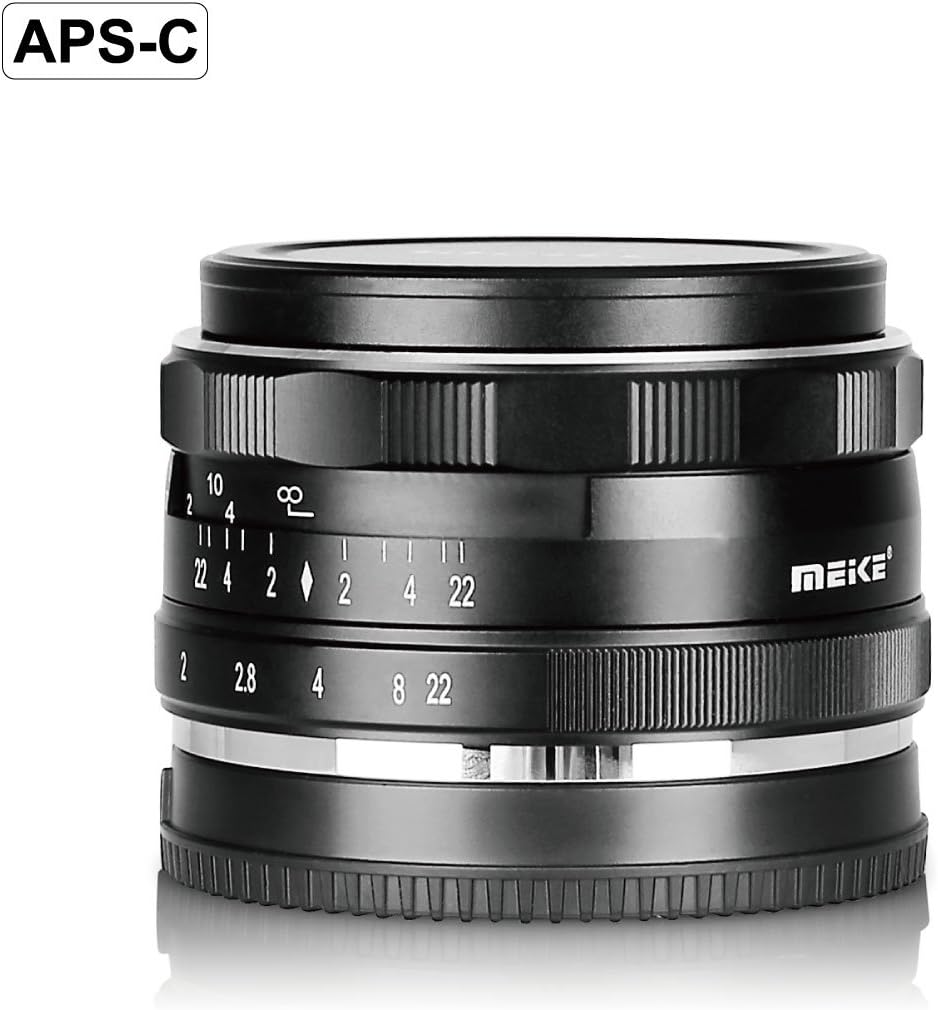
Meike 35mm f/1.7 — The Honest Entry Point
Price range: $65–$85 new.
Manual focus, no autofocus, no frills. The story behind one owner review that circulates among X-mount communities: a photographer who gave away a camera kit to someone just starting out needed an affordable lens to complete the gift. The Meike 35mm f/1.7 was the answer. That framing — practical, generous, unglamorous — is exactly right for this lens.
Across owner accounts, the Meike delivers soft-but-usable wide-open performance at f/1.7 and improves noticeably at f/2.8 and f/4. It is not competing with Sigma Art glass. It is competing with “no lens at all” or “the kit zoom,” and against those alternatives it wins clearly. The aperture ring has a good tactile feel, which matters more than it sounds on a manual lens you’ll be adjusting constantly.
A footnote for new X-mount owners: body caps and rear caps from Meike, TTArtisan, and Viltrox all receive consistent praise for fit — they seat properly without play. When you’re swapping manual lenses frequently on the street, a rear cap that doesn’t wobble is worth noticing.
Decision Rules: If X, Then Y
-
If you shoot astrophotography, landscapes, or architecture and rarely need AF: The Rokinon 12mm f/2.0 is the clearest recommendation in this guide. The optical performance relative to price is the strongest ratio here.
-
If you want a pocketable daily lens and shoot RAW: The TTArtisan 27mm. Accept the vignetting, correct it in post, and spend the $325 you saved on a second battery and a fast SD card.
-
If you’re on an X-T4, X-T5, or X-H2 and want something near-native performance for less: The Viltrox 35mm f/1.7 AF earns a genuine look. On current bodies with improved AF systems, the autofocus performance gap narrows considerably.
-
If you’re buying a starter kit for someone else or testing the 35mm focal length before committing to the XF33mm: The Meike 35mm f/1.7 is the right call. It costs less than a dinner out and delivers honest results.
-
If you shoot fast-moving subjects, events, or weddings: None of these lenses. Manual focus at an event is a workflow liability. Rent or buy native Fujifilm glass for that work; the rental math from Lensrentals often favors renting for one-off jobs rather than buying a lens you’ll use twice a year.
Frequently Asked Questions
Is manual focus actually usable on a Fujifilm X camera for street or portrait shooting?
More usable than on most other systems, because Fujifilm X bodies offer both focus peaking (a colored outline highlights sharp edges in the frame) and digital split image (a classic rangefinder-style focus aid). For street shooting, zone focusing — pre-setting focus to a fixed distance like 2 meters and stopping down to f/5.6 for deep depth of field — is how many photographers work with manual primes. For portraits, focus peaking at f/1.7–f/2 is workable but requires practice. Owners consistently describe the learning curve as one to two outings before it feels natural.
How does the Rokinon 12mm compare to the Fujifilm XF 14mm f/2.8 for astrophotography?
The XF14mm is a 14mm native autofocus lens (roughly 21mm full-frame equivalent); the Rokinon 12mm is a manual 12mm (roughly 18mm equivalent) — meaningfully wider, which means more sky in the frame. The Rokinon’s f/2 aperture is one stop faster than f/2.8, which translates directly to either shorter exposure times or lower ISO settings. Photography Life’s lens coverage notes that the Rokinon 12mm is a community standard for X-mount astrophotography precisely because of that aperture advantage. The XF14mm earns its price for daytime landscape and architectural work where AF and Fujifilm’s optical correction profiles matter. For pure night-sky work, the Rokinon is the more specialized tool.
Will the Viltrox 35mm f/1.7 autofocus work reliably on older X bodies like the X-T2 or X-T3?
In good light and with stationary or slow-moving subjects: yes, reliably. In low light or with subjects moving unpredictably: noticeably less so compared to native Fujifilm lenses. The X-T2 and X-T3 use contrast-detect AF in some modes and phase-detect in others; third-party lenses like the Viltrox rely on firmware communication that isn’t as tightly optimized as the native lens protocol. Viltrox does push firmware updates — owners report that recent firmware revisions improved X-T3 performance meaningfully — but verifying your body’s firmware compatibility before purchase is the right move.
Does the TTArtisan 27mm vignetting require post-processing correction or can it be fixed in-camera?
Both options work. In Fujifilm’s in-camera RAW processing, you can apply a peripheral illumination correction manually through the lens correction menu — it requires manual entry since the TTArtisan doesn’t have an embedded correction profile. For JPEG shooters, the vignetting is visible and requires either in-camera adjustment or acceptance as a stylistic element (some photographers actively like it for the vintage quality it lends). For RAW shooters using Lightroom or Capture One, a manual correction takes under thirty seconds and resolves it cleanly.
Which of these lenses is best for someone who has never used manual focus before?
The Viltrox 35mm f/1.7 AF, because it has autofocus — making it a transitional lens rather than a commitment to full manual operation. If the budget requires a pure manual option, the Meike 35mm f/1.7 has a longer focus throw and a smooth ring that makes the learning process more forgiving than shorter-throw designs. Pair either with focus peaking enabled on your X body and practice zone focusing for street work before attempting wide-open portraiture.