June 20, 2026 • Declan Marsh • 10 min reading time • Prices verified June 11, 2026
Fujifilm X-Mount Telephoto Lenses: XC 50-230mm vs. XF 70-300mm and When to Upgrade
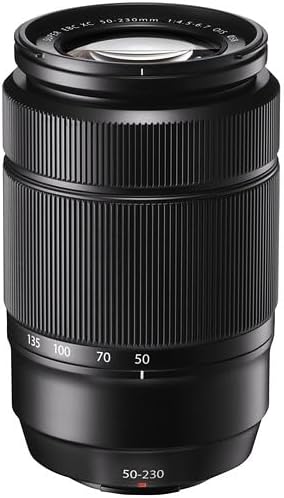
If you’ve just bought a Fujifilm mirrorless camera — or you already own one and you’re hunting for your first real reach lens — you’ve almost certainly run into these two names: the XC 50-230mm and the XF 70-300mm. A quick explainer before we get into the weeds: Fujifilm’s X-mount lens system divides into two tiers. XC lenses are the more affordable, consumer-oriented line — lighter plastics, no weather sealing, but genuinely competent optics. XF lenses are the professional tier — better build quality, weather resistance on most models, and typically faster or more sophisticated autofocus. A telephoto zoom, for anyone just entering this, is a lens that lets you pull in distant subjects: birds, athletes, a musician on a stage, wildlife on a hillside. The question here is whether the roughly $200–$280 XC 50-230mm is “good enough” for serious work, or whether the roughly $750–$800 XF 70-300mm is the smarter long-term buy. This article shows you the math, names the real trade-offs, and ends with a clear decision rule.
What You’re Actually Comparing
Before the specs, let’s frame the decision honestly. These two lenses occupy different philosophical positions in Fujifilm’s lineup, and the gap between them isn’t just dollars — it’s also intent.
The XC 50-230mm F4.5-6.7 OIS II is Fujifilm’s “good enough and then some” telephoto. It was designed as a kit complement — the second lens you buy with an X-T30 or X-A series body when you want reach without weight or cost anxiety. Reviewers at The Phoblographer and Photography Life have both noted in their respective XC 50-230mm coverage that it overdelivers against expectations: sharp across most of its range, well-controlled color, and far less optically flawed than the price tag would lead you to anticipate. The honest caveats are that it is not weather-sealed, has no aperture ring (a tactile loss that matters to Fujifilm shooters who like direct control), and tops out at f/6.7 at the long end — which means you’re fighting noise in anything but good light.
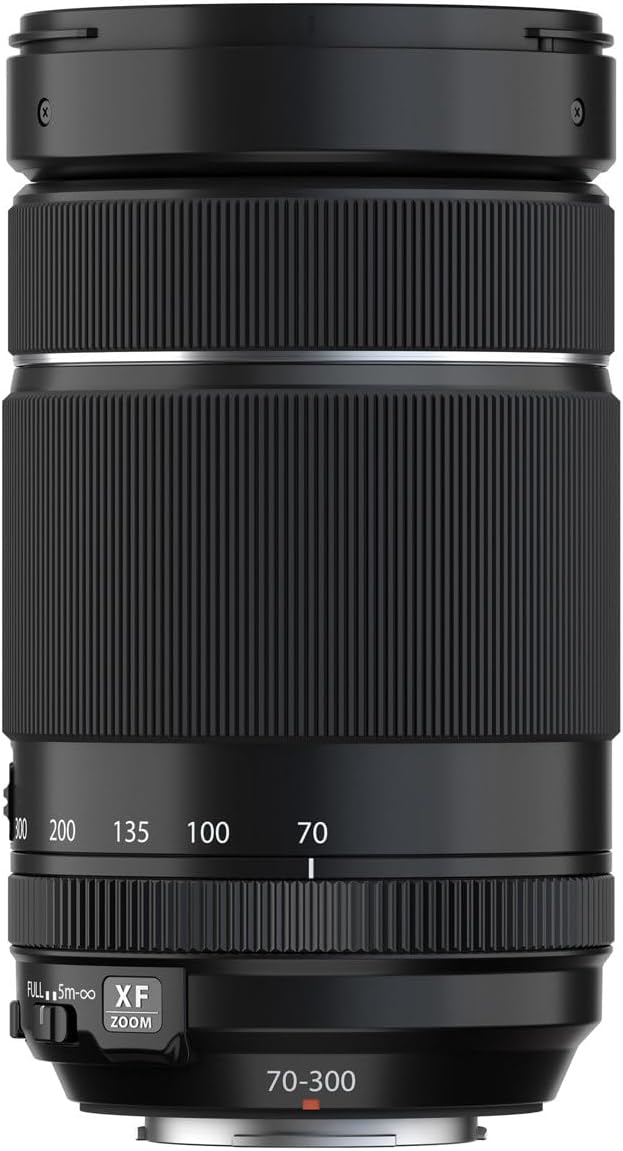
The XF 70-300mm F4-5.6 R LM OIS WR is a different proposition entirely. It’s a genuine enthusiast-to-professional telephoto — weather-sealed, optically stabilized, compatible with Fujifilm’s 1.4x teleconverter, and equipped with a linear motor autofocus system. In their review of the XF 70-300mm, DPReview specifically called out the lens’s fast and reliable tracking performance as a standout characteristic. Wildlife and sports photographers in long-run ownership accounts consistently reach for this lens when serious field use is required. It starts at a longer focal length (70mm vs. 50mm at the wide end), so you give up some short-end versatility, but everything it gains on the long end — including teleconverter reach — is meaningful for working photographers.
By the Numbers
| Feature | XC 50-230mm | XF 70-300mm |
|---|---|---|
| Focal range (X-mount APS-C) | 50–230mm | 70–300mm |
| Full-frame equivalent | ~76–351mm | ~107–457mm |
| Maximum aperture (long end) | f/6.7 | f/5.6 |
| Weather sealed | No | Yes (WR) |
| Teleconverter compatible | No | Yes (XF 1.4x TC WR) |
| Aperture ring | No | Yes |
| Approx. street price (May 2026) | $200–$280 | $750–$800 |
Where Each Lens Actually Wins
The Budget Case: XC 50-230mm for Value and Portability
The XC 50-230mm wins on value and portability. Owners who use it on hiking trips, family travel, and casual wildlife outings repeatedly describe it as lighter than expected and easy to carry alongside a body. If your shooting is opportunistic — you’re not building a professional kit, you just want reach when something interesting appears — this lens is a remarkably honest tool.
The optics punch above their weight class. In their coverage of the XC 50-230mm line, both The Phoblographer and Photography Life documented strong center sharpness and controlled chromatic aberration that is difficult to anticipate at this price point. For a hobbyist shooting in good daylight, the image quality argument for upgrading isn’t as strong as the marketing might suggest.
One practical note worth taking seriously: avoid the silver colorway if cosmetics matter to you. Owner feedback across multiple review sources is specific — the silver version is optically identical to the black, but the finish has been described by buyers as looking cheaper, and it sometimes costs a few dollars more. There is no optical, mechanical, or autofocus difference between the two colorways. Unless you’re matching it to a specific silver body for aesthetic reasons, the black version is the smarter purchase.
Fujifilm
$299.95
In stock on Amazon
Check price on AmazonThe Mid-Range Case: When the XC Hits Its Ceiling
There is a middle ground worth naming: photographers who own the XC 50-230mm and shoot on a 24–26MP body like the X-T30 II or X-S10, but who are beginning to chase faster subjects or shoot in mixed weather conditions. This is where the XC starts to show its limits — not in optical quality specifically, but in system flexibility.
The lack of weather sealing becomes a real operational constraint. Packing up a telephoto lens every time clouds roll in is not a minor inconvenience; it means missed shots. The absence of an aperture ring is a workflow friction for any shooter who has moved to a body with full physical controls. And the f/6.7 maximum aperture at 230mm means that golden-hour wildlife shooting — the conditions where telephoto reach is most desirable — is also the shooting situation where the lens is most likely to demand a higher ISO than you’d prefer.
For shooters in this middle position, the used market is worth running the math on. As of May 2026, MPB and KEH Camera both regularly list used XF 70-300mm units in Excellent condition in the $580–$650 range. If you sell your XC, the effective out-of-pocket upgrade cost drops to roughly $350–$450 — a figure that most intermediate shooters recoup quickly in shoot quality and keeper rate.
Fujifilm
$949.00
In stock on Amazon
Check price on AmazonThe Professional Case: XF 70-300mm for Serious Field Use
The XF 70-300mm wins on every professional-use axis. Weather sealing is not a luxury once you’re shooting a wedding in light rain, tracking birds at a wetland, or moving through mountain terrain with your kit on your body. In their review of the XF 70-300mm, DPReview noted the weather-resistance construction as a genuine field advantage, not a checkbox feature.
The aperture ring gives you the tactile Fujifilm shooting experience that the XC simply cannot match. And the teleconverter compatibility is a genuine capability expansion — adding the XF 1.4x TC WR turns your 300mm into a 420mm equivalent (roughly 640mm in full-frame terms), which is a meaningful jump for wildlife and compressed-perspective work.
The linear motor autofocus is legitimately better for tracking moving subjects. Lensrentals, in their notes on X-mount telephoto rental patterns, identifies the XF 70-300mm as a consistent choice among event and wildlife clients who could select any lens in their inventory. That pattern of professional preference is a real-world signal worth taking seriously.
For photographers shooting on a high-resolution body like the X-T5 or X-H2, the XF 70-300mm also removes the optical ceiling that the XC imposes. Photography Life’s review of the XF 70-300mm specifically addresses its performance on demanding sensors and describes the lens as a strong match for high-resolution bodies — a claim the XC cannot make with equal confidence.
Fujifilm
$949.00
In stock on Amazon
Check price on AmazonThe Upgrade Decision: When the Math Says Go
Stay with the XC 50-230mm if:
- You’re shooting primarily in good light and your keeper rate is already high
- You’re building a travel kit where total bag weight is a hard constraint
- Your body is an X-T30 II, X-S10, or similar mid-range body — the optical delta between these lenses is narrower on lower-resolution sensors
- You’re a hobbyist and the $500-plus price difference would meaningfully affect another purchase — a prime lens, a better bag, a faster memory card setup
Upgrade to the XF 70-300mm if:
- You’re shooting on an X-T5 or X-H2 — bodies with 40MP sensors where lens sharpness becomes the ceiling, not the floor
- You shoot wildlife, sports, or any subject that involves tracking motion — the linear motor autofocus and teleconverter compatibility are real-world advantages, not spec-sheet theater
- You’re building a two-lens professional travel kit and this telephoto needs to carry weight in paid work contexts
- Weather is a variable in your environment and you cannot afford to pack up when a cloud rolls in
The two-lens kit of XF 18-55mm plus XF 70-300mm is a setup that outdoor photographers consistently describe as covering roughly 90% of shooting scenarios at a fraction of a professional prime kit’s weight and cost.
Frequently Asked Questions
Is the XC 50-230mm sharp enough to use on a high-resolution body like the X-T5?
The X-T5’s 40.2MP sensor is genuinely demanding — it will reveal optical weaknesses that a 24–26MP sensor forgives. Reviewers at both Photography Life and The Phoblographer note in their respective XC 50-230mm coverage that the lens performs well in the center of the frame but shows more corner softness and chromatic aberration wide open compared to the XF lineup. On the X-T5, you’ll want to shoot stopped down — f/8 or so — for the sharpest results, and pixel-peeping at 40MP may make flaws visible that simply aren’t apparent on lower-resolution bodies. It works, but it is not the optimal pairing. If you own an X-T5, the XF 70-300mm is the cleaner match.
Does the XF 70-300mm work with Fujifilm’s 1.4x teleconverter, and which bodies support it?
Yes — the XF 70-300mm F4-5.6 R LM OIS WR is compatible with the Fujifilm XF 1.4x TC WR teleconverter, extending effective reach to 420mm on APS-C (roughly 640mm full-frame equivalent). The combination works on any X-mount body that supports teleconverter use, including the X-T5, X-H2, X-H2S, X-T4, and X-T3. One honest caveat noted in DPReview’s review of the XF 70-300mm: autofocus performance degrades noticeably with the teleconverter attached, particularly in lower light or on fast-moving subjects. For static wildlife or landscapes at distance, the combination is excellent. For fast-moving birds in flight, expect a lower keeper rate than you would achieve without the TC attached.
What focal length does the XF 70-300mm cover in full-frame equivalent terms?
Because Fujifilm X-mount cameras use an APS-C sensor with a 1.5x crop factor, the XF 70-300mm covers approximately 107–457mm in full-frame equivalent terms. That is a substantial reach — comparable to what a 100-400mm or 150-500mm zoom delivers on a full-frame body, and genuinely useful for wildlife, sports, and compressed-perspective landscape work.
Which lens is better for someone building a two-lens travel kit starting from a kit zoom?
If you’re pairing with a standard kit zoom like the XF 18-55mm or XC 15-45mm, the answer depends on your budget and shooting context. For a casual travel kit where you want to keep total weight and spend low, the XC 50-230mm is a logical complement — it’s lightweight, the focal length overlap with most kit zooms is minimal, and the image quality will satisfy most travel and family shooting scenarios. For a serious travel kit — one you’d use for paid work, outdoor adventure, or situations where weather is a variable — the XF 70-300mm is the correct answer. The weather sealing, sharper long-end performance, and teleconverter compatibility make it a genuine working tool rather than a convenience lens.
The bottom line: the XC 50-230mm is not a lens you should be embarrassed to use, and if you already own one, there is no urgency to replace it unless you’re hitting specific walls. But if you’re shooting on a high-resolution body, working in variable weather, or chasing subjects that move — the XF 70-300mm is the lens that stops being a compromise and starts being a tool.