September 21, 2026 • Declan Marsh • 11 min reading time • Prices verified June 11, 2026
The Full-Frame Starter Camera Compared: Canon EOS RP, R8, and Sony a7 III Side by Side
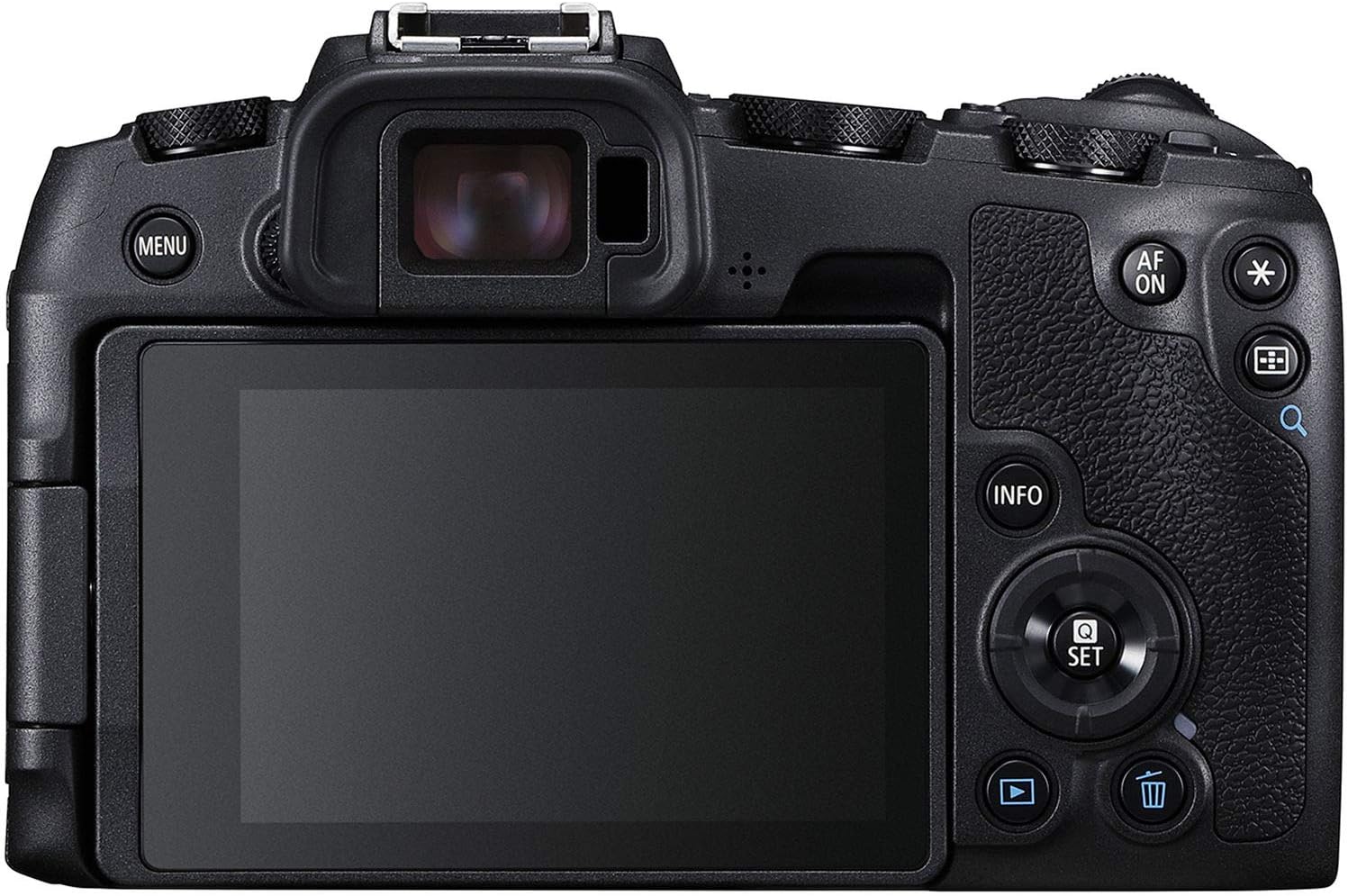
If you’ve been shooting with a crop-sensor camera — one that uses a smaller APS-C sensor, which captures a narrower slice of light than a traditional 35mm film frame — and you’re ready to step up, “full-frame” is probably the phrase you keep hearing. A full-frame sensor (the same physical size as a 35mm film negative, roughly 36×24mm) delivers more light-gathering surface area, which typically means better performance in dim conditions and a shallower depth of field — that blurry-background look portrait photographers love. The three cameras compared here, the Canon EOS RP, Canon EOS R8, and Sony a7 III, all share that full-frame sensor size and sit at the accessible end of a segment that can easily run past $6,000. This article is for photographers who already know what they want — full-frame — and need help choosing which full-frame, without getting lost in spec-sheet noise.
Let’s be direct about where each body stands in mid-2026, who should buy it, and where each one will quietly frustrate you six months from now.
| EDITOR'S PICK[Canon EOS R6 Mark II Mirrorless](https://www.amazon.com/dp/B0FGKY6WHV?tag=greenflower20-20)… | Mid-tierSony a7 III Full-Frame Mirrorle… | Budget pickCanon EOS RP Full-Frame Mirrorl… | |
|---|---|---|---|
| Sensor | 24.2 MP Full-Frame | Full-Frame | Full-Frame |
| Included Lens | ✗ | 28-70mm | 24-105mm |
| Lens Mount | Canon RF | Sony E | Canon RF |
| Body Only | ✓ | ✗ | ✗ |
| Price | $1,999.00 | $1,898.00 | $1,299.00 |
| See on Amazon → | See on Amazon → | See on Amazon → |
Where These Three Cameras Actually Sit in 2026
A quick market orientation before we dig into tradeoffs:
| Camera | Sensor | Launch MSRP (body only) | Street price, used (mid-2026 est.) |
|---|---|---|---|
| Canon EOS RP | 26.2MP full-frame | $999 | $450–$550 |
| Canon EOS R8 | 24.2MP full-frame | $1,299 | $750–$900 |
| Sony a7 III | 24.2MP full-frame | $1,999 (at launch) | $900–$1,100 |
The RP is now genuinely cheap on the used market. The R8 is the current-generation value play. The a7 III launched in 2018, has been replaced by the a7 IV, and yet continues to sell because its feature set — dual card slots, a high-capacity battery, and wide-coverage phase-detect autofocus — aged remarkably well. Used pricing above reflects certified pre-owned market conditions estimated for early-to-mid 2026; new-body pricing has shifted from original launch MSRPs.
Head-to-Head: Autofocus, Battery, and Ergonomics
Autofocus Performance
Autofocus is where the three cameras separate most sharply, and it is worth naming the gap plainly.
The Sony a7 III’s autofocus system was a revelation when it launched and remains formidable. Photography Life’s “Sony a7 III Review” describes the 693 phase-detect AF points as covering roughly 93 percent of the frame — unusually wide coverage that makes subject acquisition fast and reliable across a wide range of shooting conditions. That wide-frame coverage reduces the need to recompose after locking focus, which matters in fast-moving scenarios such as candid portraiture or event work.
The Canon EOS R8 tells a different story. DPReview’s “Canon EOS R8 Review” confirms that the R8’s subject-tracking performance is competitive with bodies priced well above its tier. The Phoblographer’s “Canon EOS R8 Review” and PetaPixel’s “Canon EOS R8 vs R6 Mark II” comparison both identify the R8’s autofocus architecture as a genuine selling point at its price, noting that subject-recognition tracking — including eye, animal, and vehicle detection — performs at a level typically associated with more expensive Canon bodies. If that assessment holds, it means you are getting subject-recognition AF derived from a camera that originally cost substantially more.
The Canon EOS RP uses an older Dual Pixel CMOS AF system. DPReview’s “Canon EOS RP Review” rates it as reliable for stills in good light but slower and less confident on moving subjects than either the R8 or the a7 III. Photographers who have used the RP for an extended period frequently describe a consistent pattern: they valued the RP as their first full-frame camera, then found its AF limitations frustrating once they shot alongside a body with current-generation subject-tracking. Video-focused owners in particular report outgrowing the RP’s AF quickly.
Canon 3380C132
$1,299.00
In stock on Amazon
Check price on AmazonBattery Life and Card Slot Redundancy
Battery life is a real-world constraint that independent reviewers flag consistently on both Canon bodies.
The RP is rated at approximately 250 shots per charge under CIPA test conditions — a laboratory estimate that real-world continuous shooting tends to underperform. The R8 is rated similarly low at around 220 shots CIPA. DPReview’s “Canon EOS R8 Review” notes this directly and flags it as a meaningful limitation for sustained event work. Both Canon bodies use the LP-E17 battery, a smaller cell that is shared with entry-level EF-M bodies and does not carry the capacity of larger mirrorless systems.
The Sony a7 III, by contrast, is rated at 610 shots CIPA and uses the NP-FZ100 battery. Photography Life’s “Sony a7 III Review” notes that the NP-FZ100 is a high-capacity cell that makes the a7 III substantially more practical for all-day shooting without constant battery management. For event photographers covering weddings, corporate work, or documentary situations, the Canon battery situation is manageable — you carry spares and build a swap habit — but it carries real costs: additional batteries, a dual charger, and the discipline to rotate mid-session. That friction deserves honest acknowledgment rather than a footnote.
Neither the RP nor the R8 offers a second card slot. The a7 III includes dual SD card slots, which allows simultaneous backup writing — a redundancy that working professionals treat as non-negotiable for irreplaceable events. If you are shooting anything where losing a card means losing shots you cannot reshoot, the a7 III’s dual-slot design is a meaningful structural advantage.
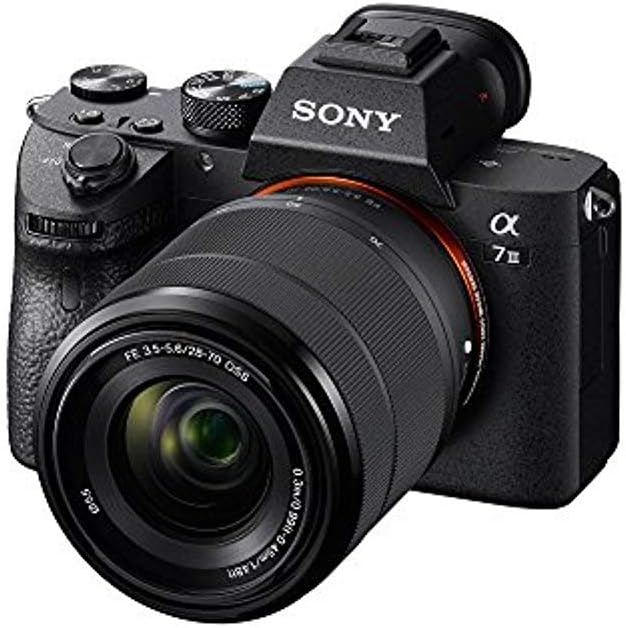
Sony
$1,898.00
In stock on Amazon
Check price on AmazonErgonomics and Physical Handling
Ergonomics diverge in ways that are genuinely personal but still worth mapping with precision.
Both the Canon EOS RP and the Canon EOS R8 have compact, relatively shallow grips. Photographers transitioning from full-size DSLRs — particularly Canon’s 5-series or 7-series bodies — may find both Canon mirrorless bodies noticeably smaller in hand. That size difference affects shooting stability during long sessions and how securely the camera sits in hand with heavier telephoto lenses. An optional battery grip accessory is available for both bodies and addresses much of this complaint, but it adds cost and bulk.
The Sony a7 III is physically larger and heavier than either Canon option, with a deeper grip profile. Photographers who shoot for extended periods — full wedding days, multi-hour corporate events — consistently describe the a7 III’s form factor as more fatigue-resistant than compact mirrorless alternatives. This is a subjective preference, but it tracks reliably across independent assessments from DPReview’s “Sony a7 III Review” and Photography Life’s long-form evaluation: the a7 III’s size, often cited as a slight negative against smaller-bodied competitors, becomes an advantage in endurance contexts.
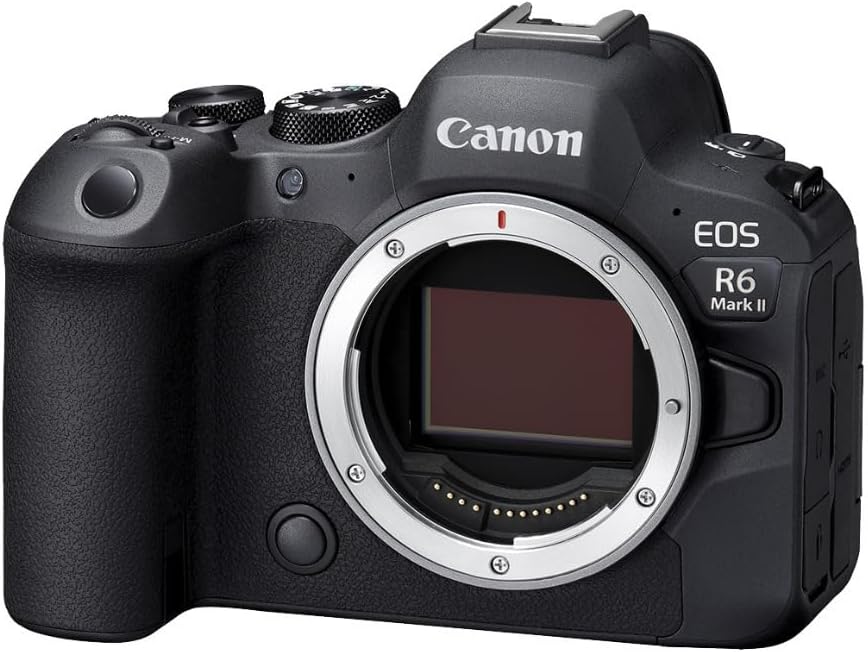
Canon
$1,999.00
In stock on Amazon
Check price on AmazonVideo: Where the R8 Earns Its Price Premium Over the RP
If video is a meaningful part of your use case, the RP and R8 diverge enough to make the choice nearly obvious.
The Canon EOS RP shoots 4K video with a significant sensor crop of approximately 1.6x, which effectively turns your full-frame lenses into APS-C-equivalent lenses for video. DPReview’s “Canon EOS RP Review” flags this as a real limitation for wide-angle video work. In practical terms: with the RP, a 24mm lens behaves like a 38mm lens when recording video. For talking-head setups, vlogging, or environmental documentary work where a genuinely wide field of view matters, this crop is a sustained frustration rather than an occasional inconvenience.
The Canon EOS R8 shoots uncropped 4K oversampled from 6K at up to 60 frames per second in full-frame mode. DPReview’s “Canon EOS R8 Review” confirms this and identifies the uncropped 4K as one of the R8’s clearest value propositions relative to the RP. The Phoblographer’s “Canon EOS R8 Review” specifically positions the body as an accessible entry point for video shooters who want current-generation Canon video specs without the cost of the R6 Mark II. For photographers who shoot stills and video from a single body, the R8 is the clearest recommendation in this comparison.
The Sony a7 III shoots 4K with a slight 1.2x crop in most modes — far less constraining than the RP’s crop but slightly more than the R8’s uncropped output. It offers S-Log2 and S-Log3 picture profiles: logarithmic color formats that capture more dynamic range (tonal latitude from deep shadows through bright highlights) and give videographers greater flexibility in color grading. For beginners who are not yet color grading, S-Log is a feature that sounds critical and often sits unused — but as skills develop, it becomes genuinely valuable. Photography Life’s “Sony a7 III Review” identifies the S-Log implementation as one of the body’s strengths for hybrid shooters who plan to grow into video post-production.
The Used-vs-New Break-Even Question
At mid-2026 market prices, the RP on the used market at $450–$550 represents the lowest barrier to full-frame entry available from a current-mount system. If you are genuinely uncertain whether full-frame suits your work — if this is exploratory — the RP at that price is a defensible learning tool. You are buying access to a format and a lens mount, not committing to a long-term primary body.
The R8 at $750–$900 used is tighter competition. At that price range, you are within $100–$200 of a used a7 III, and the decision reduces to: do you want Canon’s current-generation AF and uncropped 4K video, or Sony’s dual card slots, larger battery, and a lens ecosystem that has had more time to accumulate affordable third-party options?
The a7 III at $900–$1,100 used is the most platform-mature option of the three. It has been on the market long enough that its failure modes are well-documented and its strengths — battery endurance, AF coverage, dual card slots — have been validated by years of independent professional use. Photography Life’s “Sony a7 III Review” describes it as one of the most consequential full-frame mirrorless releases of its era, a position that holds up given how long the body has remained competitive in the used market even after the a7 IV arrived.
Frequently Asked Questions
Does the Canon EOS R8 battery life make it impractical for event photography?
It is a real constraint, not a dealbreaker. The R8’s CIPA rating of approximately 220 shots per charge is low by event-photography standards. Photographers who shoot weddings or multi-hour events with the R8 should plan to carry at least two spare batteries and a dual charger. That is an added cost and a workflow habit to build, but it is manageable. If battery logistics are not something you want to manage, the Sony a7 III’s NP-FZ100 system is meaningfully more forgiving on a per-charge basis.
Can I use existing Canon EF lenses on the EOS RP and R8 with an adapter?
Yes. Both the RP and R8 use Canon’s RF mount, and Canon’s EF-EOS R adapter allows EF and EF-S lenses to mount with full electronic communication — autofocus, image stabilization, and aperture control all function. DPReview’s “Canon EOS RP Review” and “Canon EOS R8 Review” both confirm full adapter compatibility. If you have an existing EF glass collection, this is a genuine migration path rather than a forced re-buy.
Is the Sony a7 III still worth buying in 2026 compared to the R8?
Yes, with conditions. The a7 III’s strengths — battery life, dual card slots, wide AF-point coverage, and a mature lens ecosystem — remain relevant. If your priority is event or travel photography where battery endurance and card redundancy matter, the a7 III holds up well at current used prices. If your priority is video or you want the most current Canon AF subject-tracking implementation, the R8 is the stronger choice at similar used market prices.
Which full-frame camera is better for video beginners?
The Canon EOS R8 is the clearest recommendation for video beginners. Uncropped 4K, current-generation AF including reliable eye and subject tracking in video mode, and a relatively approachable menu system make it the most accessible path into full-frame video. The Sony a7 III offers S-Log profiles that become valuable as skills develop, but its menu architecture — noted as a usability weakness in DPReview’s “Sony a7 III Review” — and slightly more complex video setup add friction for those just starting out. The RP’s significant 4K crop makes it the weakest of the three for video-first use cases.
The Decision Rule
If ergonomics and battery management do not concern you and you shoot primarily stills: buy the used a7 III if you can find one in excellent condition under $1,000 from a certified pre-owned seller. Its platform maturity, battery endurance, and AF coverage make it the most reliable long-term body of the three for stills-focused work.
If video is central to your workflow or you want the most current Canon AF performance at the lowest possible price: the R8 is the right call — new or certified pre-owned — particularly if you already own Canon RF or EF glass.
If your budget is firm under $600 and this is your first full-frame body: the RP used is a defensible entry point. Go in knowing that its AF system will likely prompt an upgrade within two years, and treat the purchase accordingly — as a format introduction rather than a permanent platform.
The wrong move is paying new-body price for the RP in 2026. At that point, the R8 is close enough in cost that its advantages — uncropped video, current-generation AF, longer product lifecycle — tip the math decisively against the older body.