August 5, 2026 • Declan Marsh • 10 min reading time • Prices verified June 11, 2026
The Hardshell Camera Backpack Decision: MOSISO vs. K&F for Traveling Photographers
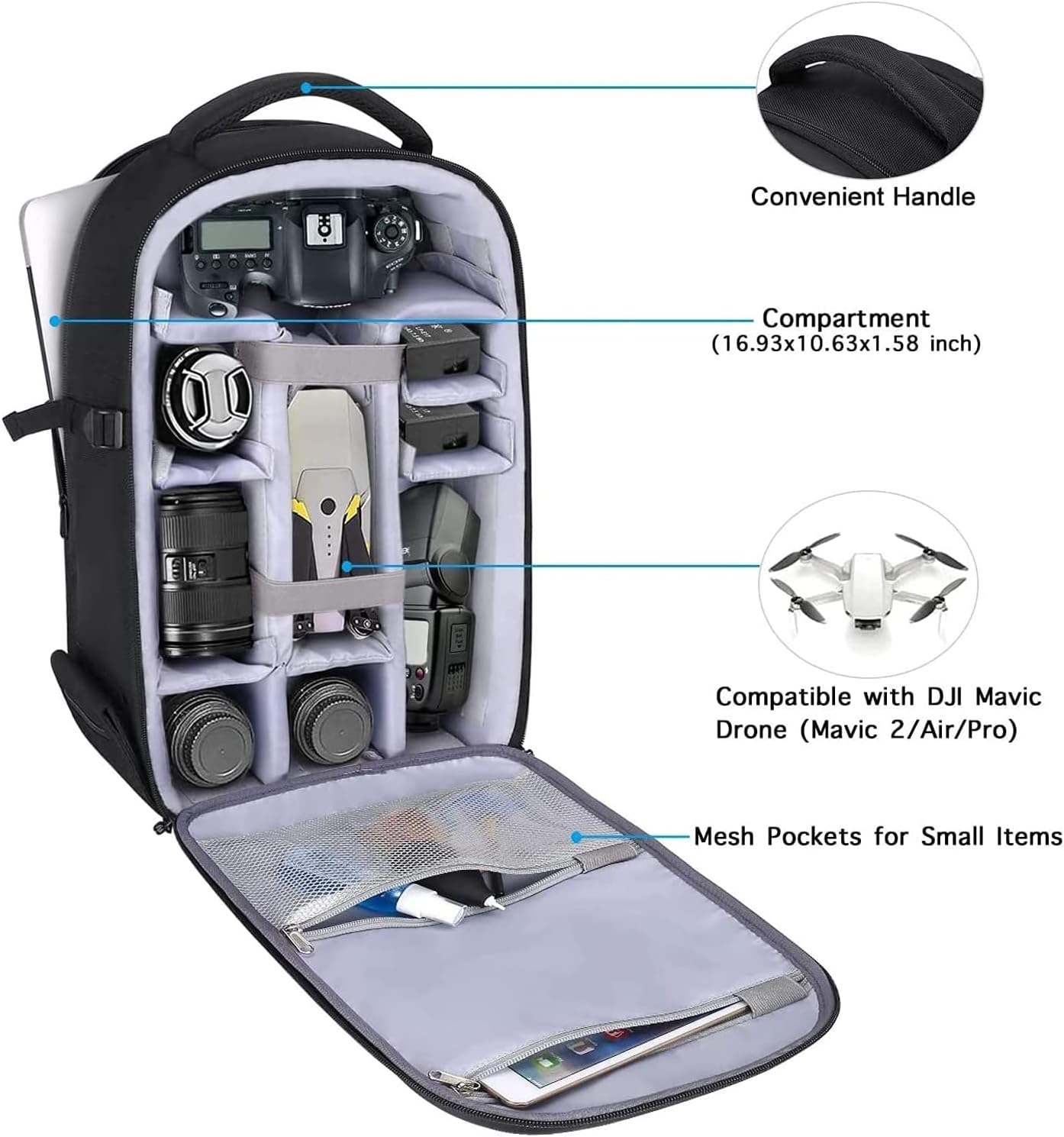
A hardshell camera backpack is built around a rigid outer shell — typically polycarbonate or ABS plastic — instead of soft nylon or canvas. That hard exterior is the whole point. It resists crushing on luggage carousels, repels rain, and gives your lenses a fighting chance when the bag gets shoved under an airplane seat or dropped on a trailhead rock. Inside, adjustable padded dividers — removable fabric walls you rearrange to create custom compartments — protect individual bodies and lenses from knocking into each other. If you’ve ever pulled a scratched filter ring out of a soft bag and wondered what hit it, you already understand the problem hardshells solve.
This article is aimed at photographers who are currently weighing a purchase: you have gear worth protecting, travel coming up, or both. We’re going to put the two most-discussed hardshell backpacks at this price point — the MOSISO hardshell and the K&F Concept hardshell — side by side, bring in the Lowepro Fast Pack and ProTactic where the comparison earns it, and give you a clear decision rule at the end. Every judgment here is drawn from aggregated owner reviews and published specifications.
| EDITOR'S PICK[Lowepro ProTactic BP 450 AW III](https://www.amazon.com/dp/B0DKTX8316?tag=greenflower20-20)… | Mid-tier[Lowepro Fast Pack BP250AW III](https://www.amazon.com/dp/B085V8PPFW?tag=greenflower20-20) B… | Budget pick[MOSISO Camera Backpack](https://www.amazon.com/dp/B07ZCRWPPV?tag=greenflower20-20) | |
|---|---|---|---|
| Capacity | — | 31.1L | — |
| Laptop size | Up to 16" | — | 15–16 in |
| Hardshell | — | — | ✓ |
| Tripod holder | — | — | ✓ |
| Rain cover | ✓ | — | — |
| Waterproof | — | — | ✓ |
| Price | $310.58 | $148.99 | $51.18 |
| See on Amazon → | See on Amazon → | See on Amazon → |
What Owners Actually Report: MOSISO vs. K&F
The fastest way to understand where these two bags diverge is to look at who buys them and what surprises them after six months of use.
MOSISO Hardshell: The Air-Travel Pick
MOSISO
$51.18
In stock on Amazon
Check price on AmazonMOSISO hardshell owners skew toward air travelers. The single most consistent theme across aggregated owner feedback — a pattern noted in Petapixel’s camera bag coverage — is airline compatibility: the bag fits in an overhead bin without a fight, and a meaningful share of buyers report squeezing it under the seat in front of them on regional jets, though that outcome depends heavily on aircraft configuration.
More telling is a lens-size anecdote that surfaces repeatedly in long-form owner reviews: buyers describe fitting a Sigma 150-600mm inside — a lens that runs roughly 11 inches collapsed and weighs over six pounds — which is an unexpectedly large item for a bag in this class. That one data point tells you the interior volume is more generous than the spec sheet implies.
The MOSISO divider system is noted for intuitive, quick setup. Owners report configuring a body-plus-two-lens layout in minutes. If you have one consistent kit, that simplicity is a feature, not a limitation. The harness is basic padded straps — adequate for city-to-car-to-airport movement, less suited for extended trail carry.
Best for: Air travelers, urban shooters, photographers carrying one body and two to three lenses who want overhead-bin confidence.
MOSISO
$51.18
In stock on Amazon
Check price on AmazonK&F Concept Hardshell: The Trail and Weather Pick
Lowepro
$148.99
In stock on Amazon
Check price on AmazonK&F Concept hardshell owners skew trail and national park. Outdoor Photographer’s coverage of national park photography consistently identifies the need to carry a full-frame system and lens trinity — wide, standard, and telephoto prime or zoom — on multi-hour hikes where weather can change without warning. Reviewers describing trips to high-elevation destinations cite the K&F hardshell’s ergonomic harness system — padded shoulder straps with a sternum strap and hip-belt webbing — as meaningfully better for load distribution over distance.
The K&F shell carries a waterproof rating (IPX4 or equivalent) rather than simple water resistance, which matters when you’re two miles from the trailhead in an afternoon thunderstorm. The shell material is polycarbonate, which is generally regarded — including in Photography Life’s Camera Bag Buyers Guide — as more impact-resistant than ABS under repeated stress.
One useful signal buried in K&F owner reviews: multiple buyers purchased the bag for Magic: The Gathering card collections and tabletop miniature transport, citing the divider system’s flexibility. We note this not to be cute, but because it confirms a practical point — the dividers reconfigure into non-camera shapes easily, which matters when you’re fitting an unusual lens or a hybrid camera-and-laptop loadout. The K&F system includes more divider pieces across most configurations and supports more layouts, but takes longer to set up from scratch than the MOSISO.
Best for: Hikers, national park photographers, full-frame shooters carrying a lens trinity in variable weather.
Lowepro
$148.99
In stock on Amazon
Check price on AmazonLowepro Fast Pack and ProTactic: Where They Fit
Lowepro
$310.58
In stock on Amazon
Check price on AmazonThe Lowepro Fast Pack and ProTactic belong in this comparison because they’re the most common alternatives photographers consider once they’ve priced out the MOSISO and K&F options. The trade-offs are specific enough to name.
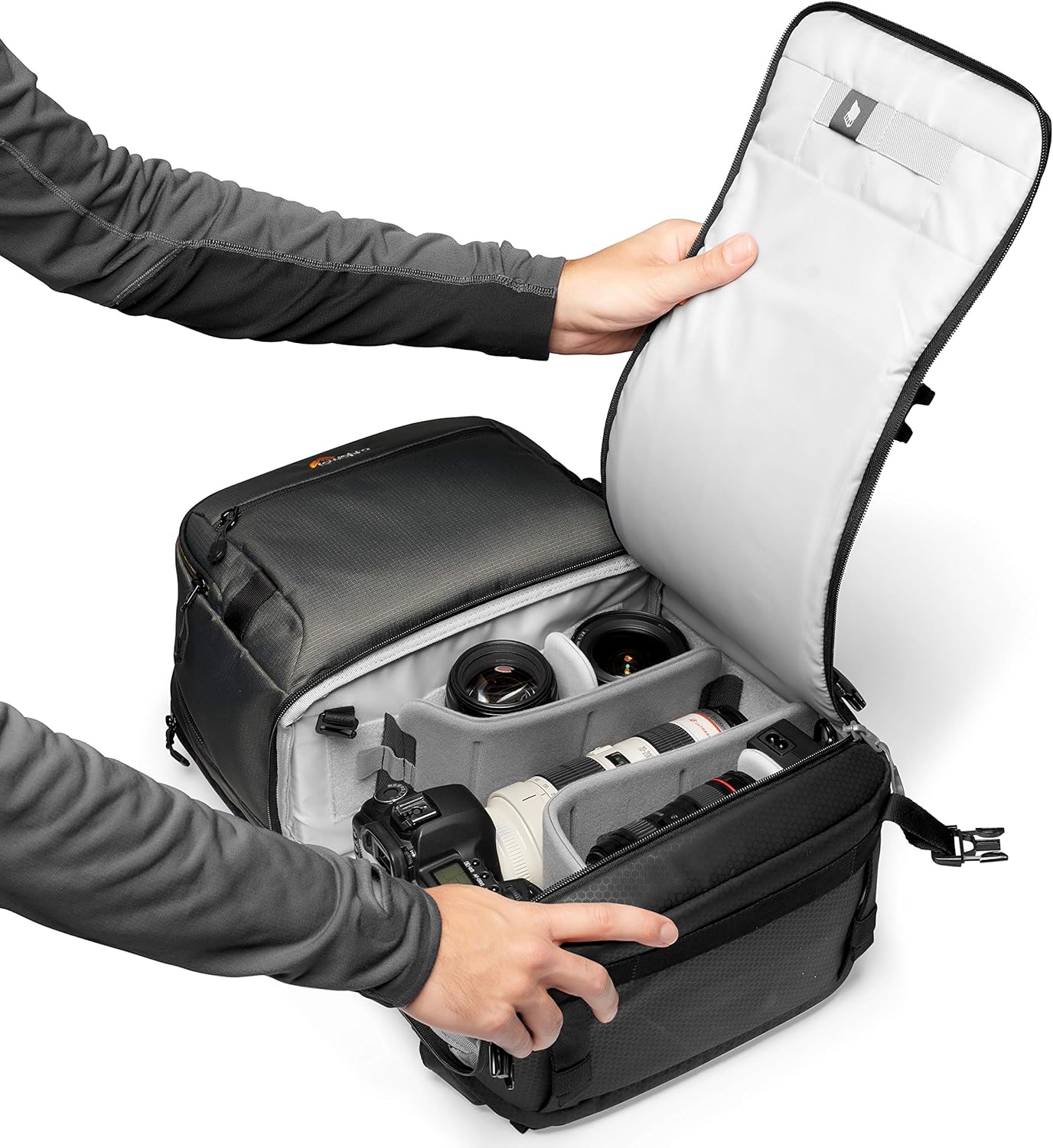
Lowepro Fast Pack buyers, based on patterns observed in Wirecutter’s “The Best Camera Bags” coverage by the New York Times product team and in Photography Life’s Camera Bag Buyers Guide reader feedback, tend to do specific dimensional math before purchasing — measuring their longest lens, checking the Fast Pack’s internal depth, and making a deliberate fit decision. The Fast Pack’s side-access zipper design, which lets you reach your camera from the side without removing the bag, is genuinely useful for documentary and street photographers who need fast, one-handed access. But the Fast Pack is a soft bag. It does not offer crush-resistance against impact or compression. If airline travel or drop protection is your primary driver, the Fast Pack is solving a different problem.
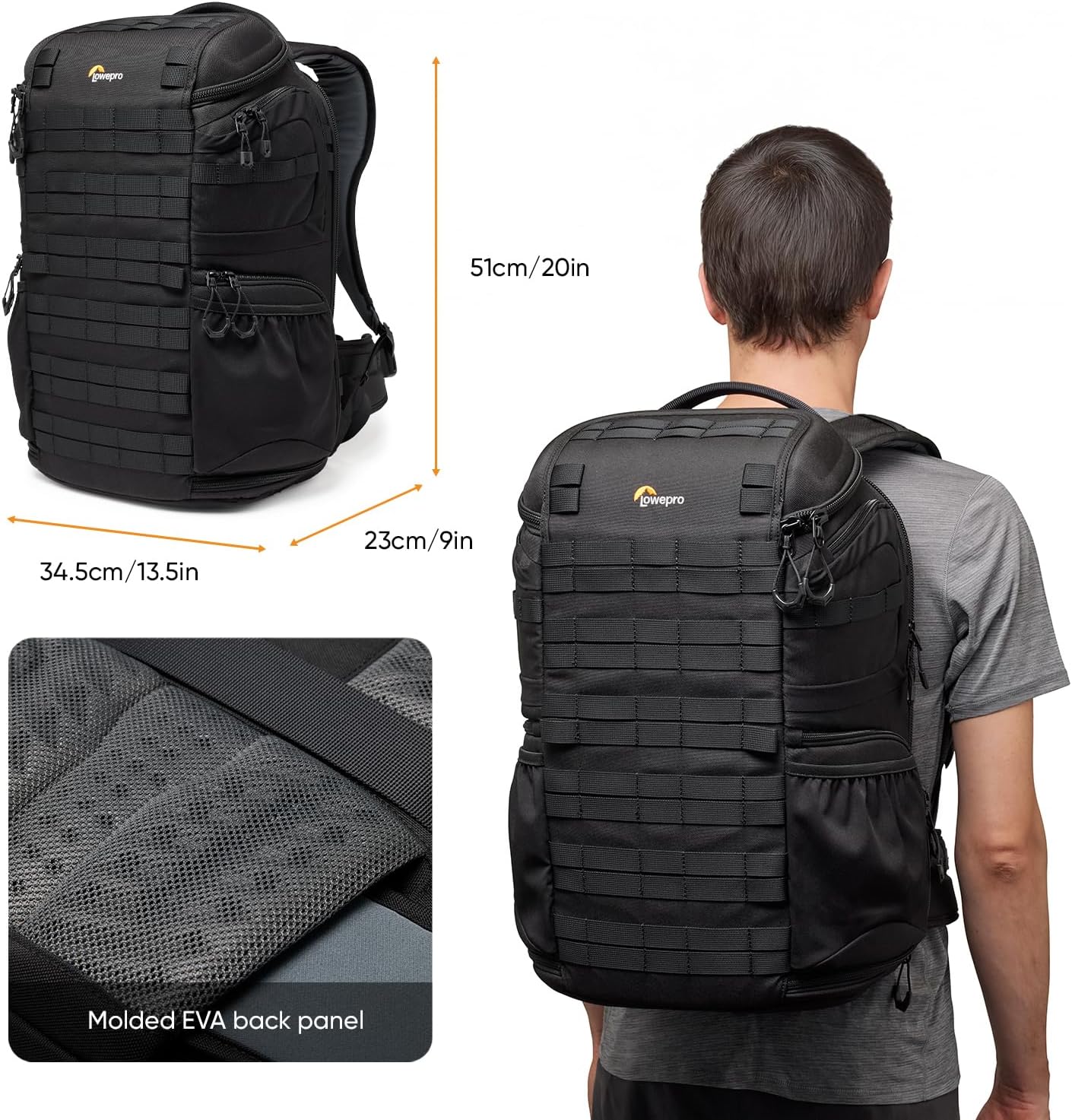
Lowepro ProTactic is where the comparison gets interesting for practitioners with serious kit. The ProTactic’s capacity and modularity are well-documented across Petapixel’s camera bag coverage and Photography Life’s Buyers Guide — it is one of the few bags that genuinely holds a full professional mirrorless or DSLR kit alongside a laptop and accessories. But here is the honest accounting: two consistent complaints surface in aggregated long-term owner reviews. First, the shoulder straps are described as mediocre for a bag at its price point — multiple owners report discomfort on carry times exceeding two hours. Second, the divider system, while modular, is described as comparatively convoluted in initial setup. These are not dealbreakers for a studio photographer loading into a vehicle. For someone hiking Sequoia or navigating a three-connection itinerary, they are real costs.
Is the ProTactic worth the extra cost over the MOSISO hardshell? If your kit includes multiple pro bodies, a 400mm lens, a 14-24mm wide zoom, and a laptop, the ProTactic’s volume may justify the premium. If your kit is one body, two or three lenses, and filters, the MOSISO hardshell solves your problem for meaningfully less money with a shell that actually protects against impact.
Best for: Studio and location photographers with large multi-body kits who prioritize volume and modularity over trail comfort or shell rigidity.
Lowepro
$310.58
In stock on Amazon
Check price on AmazonThe Divider System Difference (And Why It Matters More Than the Shell)
Both MOSISO and K&F use a velcro-wall modular divider system — the industry standard at this price tier, where individual padded fabric dividers attach via velcro loops and can be repositioned or removed entirely. But as Photography Life’s Camera Bag Buyers Guide notes, there is a meaningful distinction between bags that offer this system and bags that implement it well: the number of included dividers, their thickness, and whether the base padding is adequate without supplementary pieces.
The MOSISO divider system is praised for quick, intuitive setup. The K&F system offers more divider pieces and configuration options at the cost of a steeper initial learning curve. If you’re reconfiguring frequently — switching between a video rig and a stills kit — the K&F flexibility is genuinely useful. If you have one consistent layout, MOSISO’s simplicity is an advantage.
One honest caution that surfaces in aggregated reviews of both bags: the stock dividers are marginally adequate for heavy professional glass. Owners running Sigma Art primes or 70-200mm f/2.8 lenses — which can weigh three or more pounds each — consistently add aftermarket foam or supplementary divider kits for confidence. Budget for that if your kit skews heavy.
Does the Hardshell Exterior Actually Protect Against Drops?
This question appears in nearly every hardshell review thread, and the honest answer is: yes, within limits, and the limits matter.
ABS and polycarbonate shells — the materials used in the MOSISO and K&F respectively — are the same material families used in hard-sided travel luggage. Polycarbonate is generally more impact-resistant under repeated stress; ABS is slightly more rigid but more prone to cracking under sharp point impact. Both materials distribute and absorb impact energy better than a soft nylon exterior, which simply deforms onto whatever is packed inside.
The critical caveat: shell protection only extends to the contents if the internal padding system is doing its job. A hardshell bag dropped with loosely packed lenses will still produce lens-on-lens contact inside. Owners consistently report that the divider systems in both bags — when properly configured — prevent internal movement effectively. The shell handles external compression and point impact; the dividers handle internal shock absorption. Both systems must be working for the protection to be real.
Frequently Asked Questions
Does the MOSISO hardshell fit in an overhead bin or under an airplane seat? Based on manufacturer dimensions and owner-reported airline experiences aggregated in Petapixel’s camera bag coverage, the MOSISO hardshell fits in standard overhead bins on major carriers without issue. Under-seat fit is more variable — owners report success on full-size jets and difficulty on regional aircraft with smaller under-seat footprints. The safest planning assumption is overhead-only.
Can the K&F hardshell accommodate a 70-200mm f/2.8 mounted on a full-frame body? Owners describing full-frame lens-trinity loadouts at national parks confirm that a mounted body-plus-lens combination fits, but the 70-200mm f/2.8 — which runs roughly eight inches at minimum zoom on most versions — typically requires unmounting and separate storage to use interior space efficiently. Most photographers traveling with this lens unmount it regardless, as mounted storage stresses the lens mount over time.
How do the divider systems differ between MOSISO and K&F? Both use velcro-wall modular dividers. The MOSISO system is noted for quick intuitive setup with a simpler component count. The K&F system includes more divider pieces and supports more configuration options, but takes longer to configure from scratch. Both are functionally adequate for standard camera kit layouts.
Is the Lowepro ProTactic worth the extra cost over the MOSISO hardshell? For kit that fills the ProTactic’s volume — multiple pro bodies, super-telephoto, laptop — the capacity and modularity justify the price difference, as noted in Wirecutter’s “The Best Camera Bags.” For a one-body, two-to-three-lens kit, the MOSISO hardshell provides equivalent impact protection for less outlay.
Does the hardshell exterior actually protect against drops? Yes — both ABS (MOSISO) and polycarbonate (K&F) shells distribute impact energy better than soft exteriors. Effective drop protection requires both a functional shell and a properly configured internal divider system. The shell alone is not sufficient if gear is loosely packed inside.
The Decision Rule
If your primary concern is airline travel — overhead bin access, TSA checkpoint ease, and protecting a kit that may include a large telephoto — the MOSISO hardshell is the right tool. Its interior volume is consistently reported as more generous than the specs suggest, and its simpler harness is adequate for airport use.
If you are hiking more than two miles with your kit, regularly shooting in wet weather, or carrying a full-frame system with a lens trinity — the K&F hardshell’s superior harness system, waterproof rating, and flexible divider configuration make it the stronger choice. Outdoor Photographer’s national park photography coverage consistently points to ergonomic load distribution as the variable that separates functional trail bags from bags that get abandoned after one hard hike.
If you need fast side-access and are not primarily protecting against impact — the Lowepro Fast Pack solves a different problem and solves it well.
If you need maximum volume for a large professional kit and are willing to manage a steeper setup curve — the Lowepro ProTactic earns its price, but go in knowing the strap complaints are consistent across long-term owner reviews and plan for aftermarket padding.
The wrong bag is just as expensive as the wrong lens. Know which problem you are solving before you buy.