July 24, 2026 • Declan Marsh • 11 min reading time • Prices verified June 11, 2026
Sony Full-Frame Mirrorless Starter Kit: a7 III, a7 IV, and the Lens Decision That Changes Everything
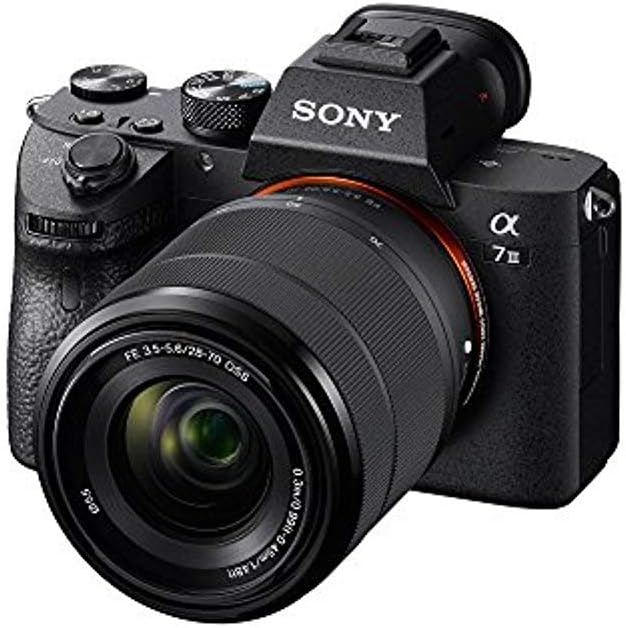
If you’ve been shooting on an APS-C mirrorless camera (a sensor smaller than a 35mm film frame) and are ready to step up to full-frame (a sensor that matches that larger film standard), or if you’re switching from a DSLR (a traditional camera with a mirror inside) and trying to figure out where to start, you’re in the right place. Sony’s Alpha 7 series has quietly become the default entry point for full-frame mirrorless photography — and for good reason. But “starting with Sony” is not a single decision. It’s actually three decisions stacked on top of each other: which body, which first lens, and whether to build toward a system or stay flexible. Get those three right and you’ll be well-served for years. Get them wrong and you’ll pay the “wrong second lens” tax that too many photographers know intimately. This guide lays out the real trade-offs with specific numbers, owner-reported experience, and clear if/then decision rules.
The Body Decision: a7 III vs. a7 IV in Mid-2026
The Sony a7 III launched in 2018 and still carries a devoted following. The a7 IV arrived in late 2021 and added meaningful upgrades. By mid-2026, the used market has matured enough that the gap between them is no longer a simple “newer is always better” equation.
What the a7 IV added over the a7 III:
- Sensor resolution jumped from 24.2MP to 33MP — a real difference for anyone cropping aggressively or delivering large prints
- The autofocus system gained improved subject recognition (human eye, animal, bird, vehicle) and a more refined real-time tracking implementation
- Video got a significant boost: 4K/60p (with a crop) and 10-bit 4:2:2 color depth, versus the a7 III’s 4K/30p 8-bit output
- The menu system was completely redesigned with a touchscreen-navigable interface
- The viewfinder resolution increased from 2.36M dots to 3.69M dots — a perceptible upgrade when reviewing focus in bright light
Photography Life’s a7 III vs. a7 IV comparison confirms the autofocus improvement is real and not just a spec-sheet delta, noting that subject recognition in the a7 IV performs more reliably in cluttered backgrounds.
Where the a7 III still holds up: The 24MP sensor is genuinely excellent for most commercial and hobbyist use. The dual-card slots, battery life, and overall handling were ahead of their class at launch and remain competitive. For photographers who don’t need 4K/60p and are shooting portraits, street, landscape, or event work where a tight crop isn’t part of the workflow, the sensor is not the limiting factor.
By the Numbers
| Sony a7 III (used, mid-2026) | Sony a7 IV (new, mid-2026) | |
|---|---|---|
| Typical street price | $1,050–$1,250 (MPB/KEH Grade B) | $2,499 (retail) |
| Resolution | 24.2MP | 33MP |
| 4K video | 30p, 8-bit | 60p (crop), 10-bit 4:2:2 |
| Viewfinder | 2.36M dots | 3.69M dots |
| Body weight | 565g | 659g |
The price gap is real: you’re looking at roughly $1,200–$1,450 in savings if you go used a7 III over new a7 IV. That difference, invested in glass, will almost always improve your images more than the body upgrade would.
The Used a7 III Risk You Should Know
One area buyers consistently flag is sensor cleanliness on used units. Owners who’ve purchased used a7 III bodies through various channels — including at least one detailed account noted by reviewers aggregating buyer experience — have found debris (including hairs) on the sensor that wasn’t disclosed in the listing grade. This is not unique to the a7 III or to any specific reseller; it’s a structural risk of any used mirrorless purchase where the sensor sits more exposed than on a DSLR. Mitigation: buy from a reseller that offers a return window, request sensor inspection photos before purchase, and plan to run a sensor check shot (plain sky or white wall at f/16) within the first day. MPB and KEH Camera both offer graded condition descriptions and return policies that reduce — though don’t eliminate — this risk.
Decision rule: If you’re primarily a stills shooter, not doing professional video, and your budget is under $2,000 all-in including a lens, a used a7 III is the right call. If you’re doing paid video work, shooting wildlife where real-time subject tracking matters, or know you’ll want 30MP+ for commercial deliverables, pay for the a7 IV.
The Lens Decision That Actually Changes Everything
Here’s the mistake most first-time full-frame buyers make: they spend 80% of their research time on the body and 20% on glass. The lens is where image character lives. The body is infrastructure. Sony’s E-mount ecosystem is mature enough in 2026 that you have genuinely good options at every price point — but the choices branch in ways that matter.
Option 1: Sony FE 50mm f/1.8 — The Honest Starting Point
The Sony SEL50F18F (Sony’s FE 50mm f/1.8) is a lens that punches well above its price in a way that experienced reviewers find almost annoying. The Phoblographer’s review of the FE 50mm f/1.8 calls out its sharpness and smooth bokeh as genuine strengths, not compromises. Portrait photographers who’ve moved to it from kit zooms consistently describe it as changing how close they can work with subjects — the combination of a longer perspective than a wide lens and a fast aperture (f/1.8 allows dramatically more light and background blur than a kit zoom’s f/5.6) creates a qualitative shift in output.
This is the correct first prime lens for most full-frame beginners. It is compact enough to carry daily without resentment, optically strong enough that it won’t become the limiting factor in your work, and affordable enough to leave budget for the kit beyond it.
Option 2: Tamron 28-75mm f/2.8 Di III VXD G2 — The Working Zoom
The Tamron 28-75mm G2 is what a lot of photographers reach for when they want one lens that covers most professional engagements. Owners who’ve used this lens as their primary option for a year or more (a pattern that appears repeatedly in long-term user reports) describe it as a genuine daily driver — not a “for now” lens waiting to be replaced, but a deliberate choice they keep returning to.
Lensrentals’ optical analysis of Tamron’s G2 lineup has consistently placed their optical performance close to Sony’s own G Master lenses at a fraction of the price. The weight caveat is real and worth naming: at approximately 540g, the 28-75mm G2 is heavier than it looks in photos. Owners who shoot full days report solving this with holster-style carry rather than neck straps, which redistributes load to the hip. It’s not a dealbreaker, but it is something to account for before committing to an eight-hour wedding or event.
The 28-75mm range is well-suited to indoor events, portraits, editorial, and travel. It won’t reach the subjects a telephoto needs to reach — but within its range, it earns its keep.
Option 3: Tamron 70-180mm f/2.8 Di III VC VXD G2 — The APS-C Upgrade Lens
If you’re coming from an APS-C kit that included something like a Sony 55-210mm f/4.5-6.3, the jump to the Tamron 70-180mm f/2.8 G2 involves a recalibration. Your equivalent reach shortens (on APS-C, that 55-210mm gave you roughly 82-315mm equivalent; on full-frame, 70-180mm is 70-180mm). But what you gain is substantial: a constant f/2.8 aperture throughout the zoom range versus a variable f/4.5-6.3 that loses two-plus stops at the long end. PetaPixel’s review of the 70-180mm G2 notes that this aperture advantage translates directly to cleaner results in indoor sports, dim event venues, and any situation where you were previously pushing ISO to compensate for a slow kit telephoto.
For photographers who relied heavily on APS-C telephoto reach for wildlife or sports, the full-frame trade-off deserves honest appraisal: if reach is your primary need, you may want to supplement with a longer prime or continue renting a 100-400mm for those specific sessions. For portrait, event, and indoor sports photographers, the 70-180mm G2 fills the gap cleanly.
Navigating the a7 IV Menu System as a Canon or Nikon Switcher
This comes up often enough that it deserves direct treatment. Sony’s menu system has a reputation — not entirely unearned — for being deep and non-intuitive on older bodies. The a7 IV’s redesigned menu (introduced with this generation) is a genuine improvement. DPReview’s a7 IV review specifically notes the new tabbed structure is more navigable than the a7 III’s legacy menu, with a customizable “My Menu” page that lets you surface the settings you actually change.
For Canon DSLR switchers: the logic is different, not harder. Canon tends to keep menus shallow and linear; Sony menus are deep with more sub-levels. Budget a weekend with the manual to set up your custom buttons before your first shoot. Owners who’ve made the 15-year DSLR-to-mirrorless switch consistently report that the adjustment period is real but short — most describe feeling comfortable within 30–60 days of regular shooting.
For Nikon DSLR switchers: the ergonomic layout (dual control dials, thumb joystick for AF point selection) will feel familiar faster than the menu system does. The autofocus behavior in mirrorless is genuinely different from DSLR phase-detect; give yourself a few portrait sessions to stop overriding the subject tracking and let it work.
Frequently Asked Questions
Is the a7 III still worth buying used in 2025–2026, or has the a7 IV come down enough in price?
For stills-focused photographers on a budget, the a7 III used at $1,050–$1,250 remains a strong value in mid-2026. The a7 IV has not dropped to a price point where the stills-only shooter gets dollar-for-dollar value over a clean used a7 III. If you’re doing professional video or need 33MP for large-format commercial output, the a7 IV justifies its premium. Otherwise, take the savings and invest in glass.
Does the Sony 50mm f/1.8 work well on the a7 IV, or is it only for older bodies?
It works excellently on the a7 IV. The FE mount is consistent across Sony’s full-frame lineup, and the a7 IV’s improved autofocus system actually makes subject-eye detection faster with this lens than on older bodies. There’s no compatibility concern — the SEL50F18F is a current-catalog lens designed for the full E-mount ecosystem.
What is the real-world weight of the Tamron 28-75mm G2 in a full day of shooting?
Spec sheets put the lens at approximately 540g. Mounted on an a7 IV (659g body), you’re carrying roughly 1.2kg before adding a strap, cards, and batteries. Owners who shoot full event days report that neck-carry becomes uncomfortable by hour four; most switch to holster-style hip carry or a two-camera harness. The weight is manageable with the right carry system — it just requires planning.
Can the Tamron 70-180mm G2 replace the Sony 55-210mm for someone upgrading from APS-C?
For indoor portraits, events, and dim-light sports: yes, and it’s a meaningful upgrade. The constant f/2.8 aperture recovers two-plus stops over what the 55-210mm offers at 210mm, which translates to lower ISO and sharper results. For reach-limited applications like wildlife and outdoor sports where you relied on the crop factor’s effective magnification, the transition involves a genuine reach reduction you’ll need to compensate for with proximity or a longer telephoto.
Is the a7 IV menu system difficult for someone switching from Canon or Nikon DSLRs?
More different than difficult. The a7 IV’s redesigned menu is a real improvement over the a7 III’s older interface. Set aside time before your first professional engagement to configure your custom button layout and My Menu page — owners consistently report that this front-loaded setup time pays off quickly. The learning curve is measured in weeks, not months.
The Decision Framework
If stills are your primary purpose and your all-in budget (body + first lens) is under $2,000: Used a7 III plus the Sony FE 50mm f/1.8. Use what’s left to build toward the Tamron 28-75mm G2 as your second purchase.
If you’re doing paid video, need 33MP for commercial print deliverables, or want the most current autofocus for wildlife/sports: Buy the a7 IV new. Pair it with the Tamron 28-75mm G2 as your first lens if the wedding and event market is your territory.
If you’re upgrading from APS-C and the telephoto range is core to your work: Prioritize the Tamron 70-180mm G2 over a standard zoom. The aperture gain over your current APS-C telephoto is the upgrade that will change your output first.
The lens decision is the one that changes everything — not because bodies don’t matter, but because the right glass on a used a7 III will consistently outperform the wrong glass on a new a7 IV. Build glass-first and you’ll still be using those lenses on whatever body comes next.