June 24, 2026 • Declan Marsh • 11 min reading time • Prices verified June 11, 2026
Superzoom Bridge vs. Interchangeable Lens: Which Camera Type Actually Fits Your Life?
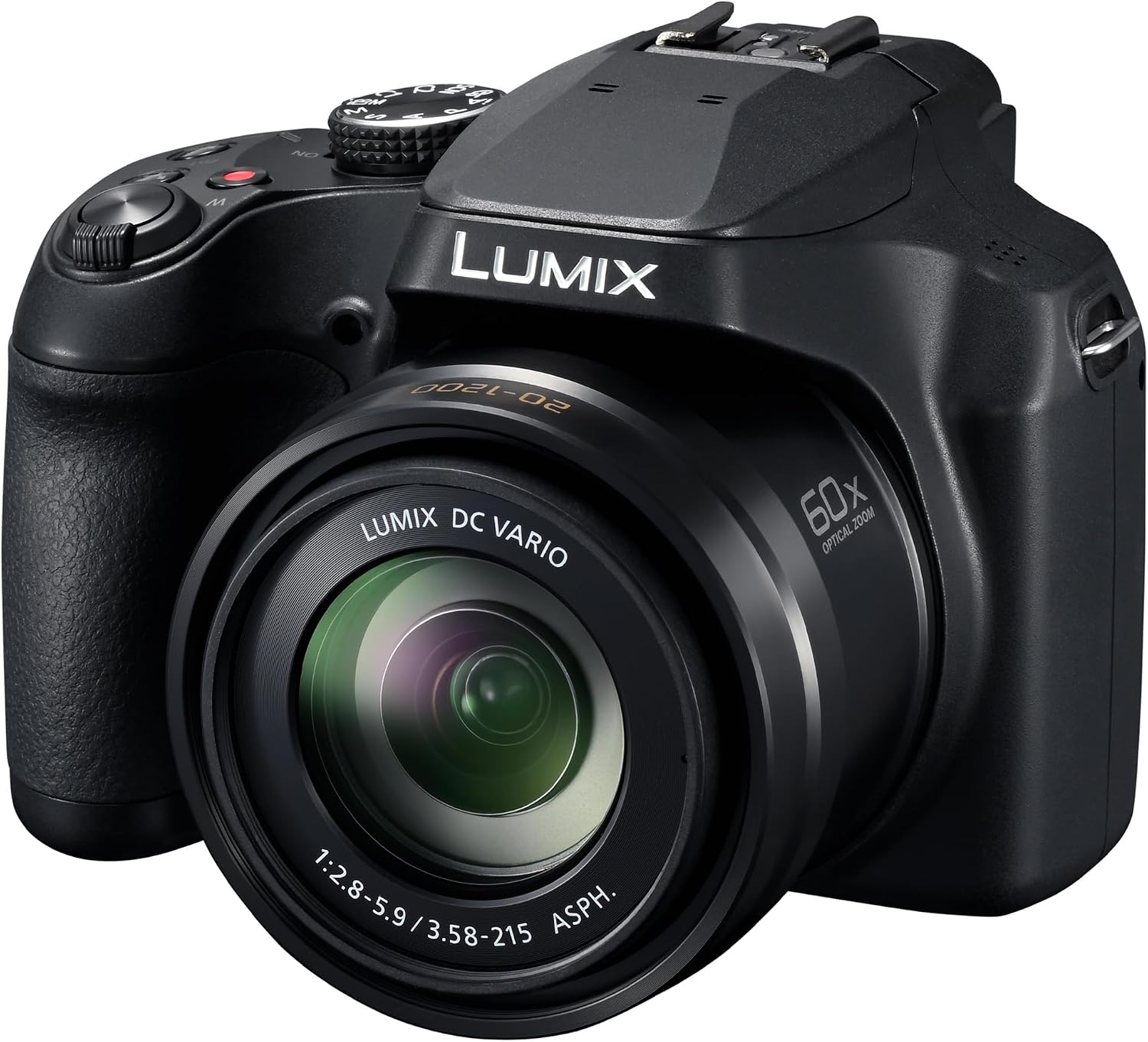
You’re standing in a camera store — or more likely, a browser tab at midnight — and you’ve narrowed it down to two very different philosophies. The first is a superzoom bridge camera: a single all-in-one body with an enormous built-in zoom lens that never comes off. Think of it like a Swiss Army knife for photography. The second is an interchangeable-lens camera — a mirrorless or DSLR body where the lens detaches, and you build a kit over time. Think modular toolkit. Both categories sit in the $150–$1,400 range for entry-to-midrange buyers, and both can produce genuinely excellent photos in the right conditions. The question isn’t which is better. The question is which one matches your life, your use cases, and the honest version of how often you’ll actually swap lenses.
This article gives you a straight answer — with real dollar figures, trade-offs named plainly, and a decision rule at the end you can act on today.
The Honest Truth About What a Bridge Camera Is (and Isn’t)
There’s a pattern in owner reviews of superzoom bridge cameras that deserves to be the thesis of this entire conversation. Buyers who researched before purchasing consistently give four and five stars. Buyers who expected mirrorless-grade image rendering in low light consistently do not. That’s not the camera failing — that’s a mismatch between expectation and product category.
Here’s what a bridge camera actually is: a fixed-lens camera with a sensor typically measuring around 1/2.3 inches — significantly smaller than the APS-C sensors (roughly 23×15mm) found in entry mirrorless bodies. That small sensor is the trade-off that makes an 60x or 80x optical zoom physically possible in a single body. A bridge camera’s lens typically covers the equivalent of roughly 20mm to 1,200mm in full-frame terms. No interchangeable-lens system comes close to that reach in a single piece of glass without spending thousands of dollars.
Photography Life’s guide “Bridge Camera vs DSLR vs Mirrorless” frames this trade-off cleanly: the small sensor exchanges dynamic range and high-ISO performance for physical compactness and zoom versatility. You can have the 1,200mm reach or the clean low-light rendering. At this price tier, you cannot have both in the same body.
Camera comparison by category:
| Camera | Sensor Size | Zoom Range | Approx. Price (May 2026) | Tier |
|---|---|---|---|---|
| Kodak PIXPRO FZ55 | 1/2.3” | 28–840mm equiv. | ~$150 | Kodak — $139.99 |
| Panasonic Lumix FZ80D | 1/2.3” | 20–1,200mm equiv. | ~$400 | Kodak — $139.99 |
| Canon EOS R50 (body) | APS-C | Kit 18–45mm | ~$680 | Canon — $679.00 |
| Sony a6700 (body) | APS-C | (no kit lens) | ~$1,400 | Sony — $857.00 |
DPReview’s review of the Panasonic Lumix FZ80 line consistently surfaces a clear pattern: owners who bought for wildlife, Yellowstone trips, and stadium sports are overwhelmingly satisfied. The reach is genuinely extraordinary at the price. Owners who expected DSLR-quality rendering at indoor birthday parties were not — and that’s a product-category problem, not a product-quality problem.
Which Camera Fits Which Photographer
Budget Pick: The Fixed-Lens Solution for Reach and Simplicity

Kodak
$139.99
In stock on Amazon
Check price on AmazonThe Panasonic Lumix FZ80D and the Kodak PIXPRO FZ55 serve two slightly different buyers within the same budget bracket, and it’s worth distinguishing them.
The Panasonic FZ80D’s primary superpower is reach. DPReview’s coverage of the FZ80 line notes that the optical zoom range — equivalent to roughly 20–1,200mm in full-frame terms — is what makes this camera compelling for wildlife and sports photography at distance. Birds at a feeder, bison at 400 yards across a Yellowstone valley, aircraft spotting, or your kid’s soccer game from the far side of the bleachers: this is the use case the FZ80D was designed for, and it delivers on that promise with consistency that earns its price. If you’re packing a single body for a national park trip and you want coverage from landscape to telephoto without managing multiple lenses, this is a genuinely smart call. It is not the right call for birthday parties in dim dining rooms.
The Kodak PIXPRO FZ55 earns praise from a different buyer entirely: people who want something meaningfully better than their phone camera, lighter and simpler than a mirrorless system, and easy enough to hand to a family member without a tutorial. Reviewers buying it specifically for casual travel — walking tours, beach vacations, day hikes — report satisfaction with daylight image sharpness at the price. The FZ55 delivers real optical zoom without the weight penalty or complexity cost of an interchangeable system. Where it won’t beat a modern flagship phone: computational photography and night modes. Where it wins: optical zoom on a beach walk without a phone plan, a data connection, or a fragile camera attached to your face all day.
Bridge cameras fit your life if:
- Extreme zoom reach in a single, low-maintenance body is the priority
- You shoot primarily in daylight or good artificial light
- You have no interest in managing a lens collection
- Your budget ceiling is firm at $150–$500 and system growth isn’t the plan
Kodak
$139.99
In stock on Amazon
Check price on AmazonMid-Tier Pick: The Entry Platform That Grows With You
Canon
$679.00
In stock on Amazon
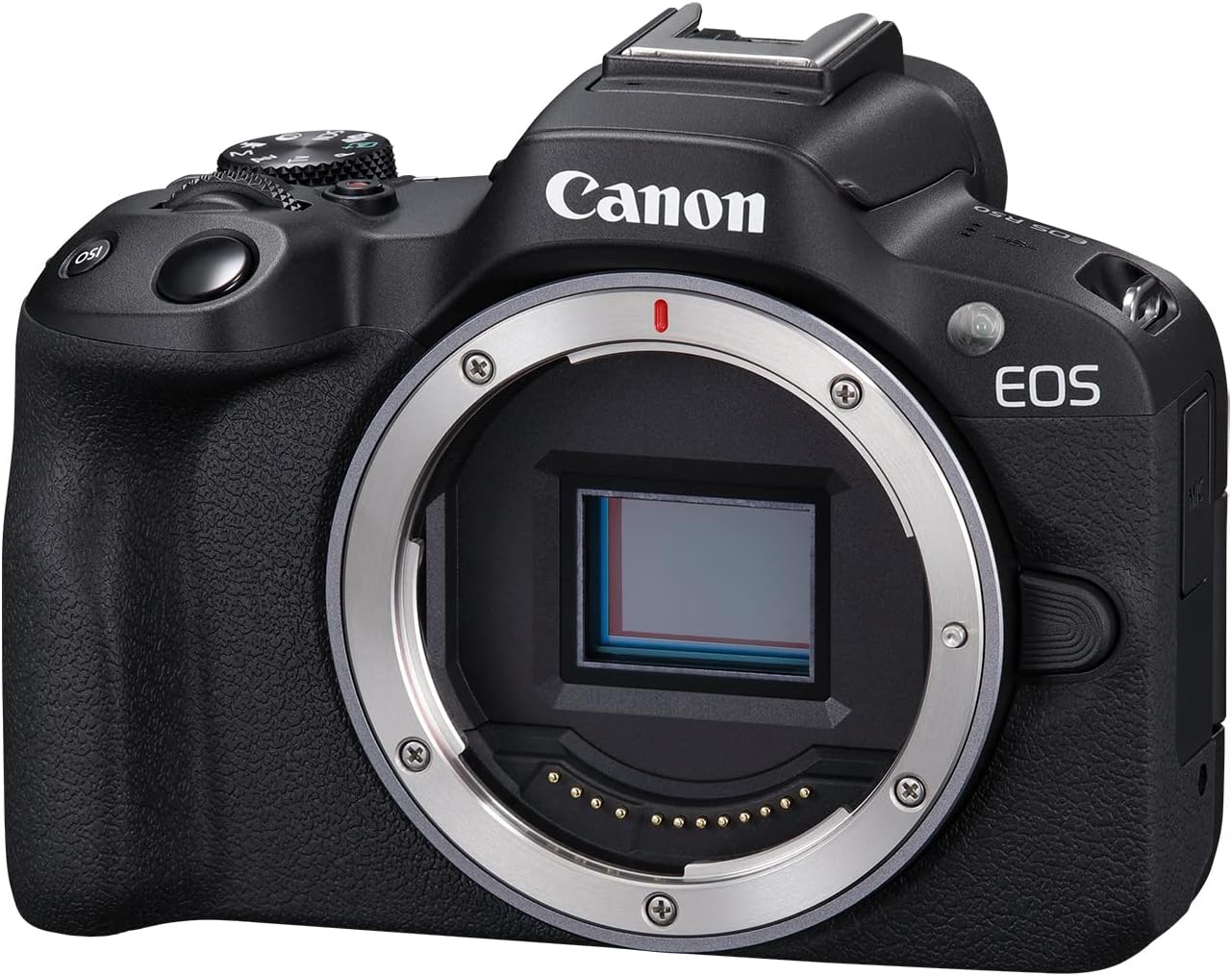
Check price on AmazonThe Canon EOS R50 is the clearest entry point into Canon’s RF-mount mirrorless ecosystem, and the case for it is fundamentally a futures argument. You’re buying a platform, not just a camera body.
The Phoblographer’s review of the Canon EOS R50 describes it as a lightweight mirrorless that consistently performs better than buyers expected at the price point — particularly for video quality. More importantly, the RF-mount compatibility means every RF-native lens Canon produces will mount and fully function on this body. When you eventually move to a Canon R6 Mark II or R8 or beyond, your glass follows you. That’s real dollar value that doesn’t appear in the body’s sticker price.
The APS-C sensor is the decisive difference versus a bridge camera for mixed-light shooting. Where the FZ80D’s 1/2.3-inch sensor begins producing noticeable noise at ISO 800 — which is where indoor birthday-party light typically forces you — the R50’s larger sensor maintains cleaner rendering at higher ISOs. If indoor shooting is a significant use case for you, this difference is not subtle.
Total kit cost reality check: The R50 body runs around $680. Add a kit 18–45mm lens (often bundled for $100–$150 more), a 64GB SD card, spare battery, and a basic bag, and a functional starter kit lands at $900–$1,100. That’s real money — and it’s before you add a second lens. Photography Life’s buyer guidance on mirrorless systems makes this explicit: the ongoing lens investment is where interchangeable systems earn their value, and where they impose their real cost. Budget for the system, not just the body.
Interchangeable-lens fits your life if:
- You shoot indoors regularly — events, low-light rooms — where sensor size matters
- You want the option to add lenses over time (portrait prime, telephoto, wide)
- You’ll eventually move up the body ladder and want lens investments to follow
- Video is a serious use case and clean high-ISO performance matters
Canon
$679.00
In stock on Amazon
Check price on AmazonPremium Pick: When Autofocus Is the Non-Negotiable

Sony
$857.00
In stock on Amazon
Check price on AmazonThe Sony a6700 is a different tier and a different conversation entirely. Petapixel’s review of the Sony a6700 highlights a consistent theme in owner accounts: the AI-subject-recognition autofocus is described as a genuine capability jump over previous generations — the kind of tracking that locks onto a moving subject and doesn’t let go. For sports photographers, event shooters, and wildlife photographers who need reliable continuous autofocus on unpredictable subjects, this matters in a way that no spec sheet fully communicates until you’ve shot with it.
This is not a beginner body priced accidentally at $1,400. It’s a practitioner tool at a practitioner price. The APS-C sensor delivers strong high-ISO performance and Sony’s E-mount lens ecosystem is one of the deepest in the industry, with both Sony-native glass and a wide selection of third-party options from Sigma, Tamron, and others.
The honest advice here: if the a6700 is at or near your budget ceiling and you’re not certain the autofocus capability is something you’ll regularly need, consider renting it first. LensRentals offers short-term rentals on bodies like the a6700, and shooting with it for a weekend on your actual subjects will tell you whether the investment is justified for your specific workflow more clearly than any review can.
The a6700 fits your life if:
- Fast-moving subjects are your primary challenge and autofocus reliability is non-negotiable
- You’re doing event work, sports, or wildlife where missing a moment is genuinely costly
- You’re investing in a lens ecosystem for the long term and want the deepest E-mount compatibility
- Budget is $1,400+ for the body, with realistic plans to invest in glass
Sony
$857.00
In stock on Amazon
Check price on AmazonThe Trade-Off Nobody Talks About Loudly Enough: Total System Cost
The body price is the start of the conversation, not the end.
Here’s the honest comparison at each tier:
A Panasonic FZ80D at ~$400 includes everything. Add a card and bag and you’re done at $450–$500 total. No second purchase required, ever. The zoom range that’s built in would cost thousands of dollars to replicate in an interchangeable-lens kit.
A Canon R50 starter kit runs $900–$1,100 when you include the kit lens, card, spare battery, and bag. A second lens — say, a telephoto for the reach you already have on the bridge camera — adds another $250–$400.
A Sony a6700 at $1,400 (body only) requires additional investment for every focal length you want to cover. A functional two-lens kit covering wide-to-portrait and portrait-to-telephoto can run $2,000–$2,500 total.
This math matters. If your budget ceiling is firm and you’re not planning to actively invest in additional glass, the bridge camera’s total cost is lower and its versatility within that budget is higher. The interchangeable-lens argument only wins on total value when you’re planning to actually use the modularity — and are honest enough with yourself to budget for it from the start.
Frequently Asked Questions
Can the Panasonic FZ80D shoot in low light or indoors at a birthday party?
Honestly? It struggles. The 1/2.3-inch sensor produces noticeable noise at ISO 800 and above, which is where indoor birthday-party light typically pushes you. DPReview’s coverage of the Panasonic Lumix FZ80 line consistently identifies low-light rendering as the primary weakness of the superzoom bridge category. If indoor shooting is a significant use case, you’ll be better served by an APS-C mirrorless. The FZ80D was built for reach in daylight, not for candle-lit rooms.
Is the Kodak PIXPRO FZ55 good enough to replace a smartphone for travel?
For most casual travel shooters, yes — with realistic expectations. The optical zoom is a genuine upgrade over any phone at this price range, and reviewers purchasing it for European or outdoor travel trips report sharp daylight images and straightforward operation. Where it won’t beat a modern flagship phone: computational photography, night mode, and post-processing for social media. If you’re posting straight from the device, a phone wins on convenience. If you want optical zoom on a walking tour without carrying a full kit, the FZ55 earns its place in the bag.
If I start with the Canon R50, can I use those lenses when I upgrade to an R6 Mark II later?
Yes — this is one of the strongest arguments for the R50 as an entry body. Both cameras use Canon’s RF mount, so every RF-native lens you buy for the R50 will physically attach and fully function on the R6 Mark II, R5, or any other RF-mount body. Lens investments in the RF ecosystem travel up the body ladder with you. The one nuance: older Canon EF-mount lenses (from the DSLR era) require a Canon mount adapter, which works reliably, but RF-native glass is the cleaner path if you’re buying new today.
How much should I budget for a complete mirrorless starter kit beyond just the body?
Plan for $350–$600 on top of the body price to build a functional first kit. That covers: a kit or mid-range zoom lens ($150–$250), a 64GB or 128GB UHS-I SD card ($20–$40), a spare battery ($30–$60), a camera bag or sling ($50–$120), and a UV filter for lens protection ($20–$40). For the Canon R50, the body-plus-kit-lens bundle typically saves $50–$80 over buying separately and is usually the right starting move. Resist the urge to buy a second lens immediately — shoot with one focal length for two to three months and let your actual shooting instincts tell you what you’re missing before spending more.
The Decision Rule
If you’ve read this far, here’s the honest version:
If your primary use is reach in daylight — wildlife, sports, travel — and you want one body with no ongoing complexity, the Panasonic FZ80D or Kodak PIXPRO FZ55 is the right call. You’ll be in good company with the thousands of Yellowstone and safari buyers who love these cameras for exactly what they do.
If you shoot indoors, in mixed light, want to grow a lens system over time, or take video seriously, start with the Canon EOS R50. Budget $900–$1,100 total for a real starter kit and treat it as buying into a platform, not just a camera body.
If autofocus reliability on fast-moving subjects is your non-negotiable — event work, sports, wildlife where you can’t miss the moment — the Sony a6700’s AI tracking system is in a different tier entirely. Spend accordingly, or rent it first through LensRentals to confirm the investment is justified for your actual workflow before committing.
No camera wins this comparison outright. The right camera is the one that matches the life you’re actually living — not the one you might theoretically live someday.