September 21, 2026 • Declan Marsh • 9 min reading time • Prices verified June 11, 2026
Superzoom Bridge Cameras for Wildlife and Travel: Panasonic FZ80D and Canon SX740 HS Tested by Real Owners
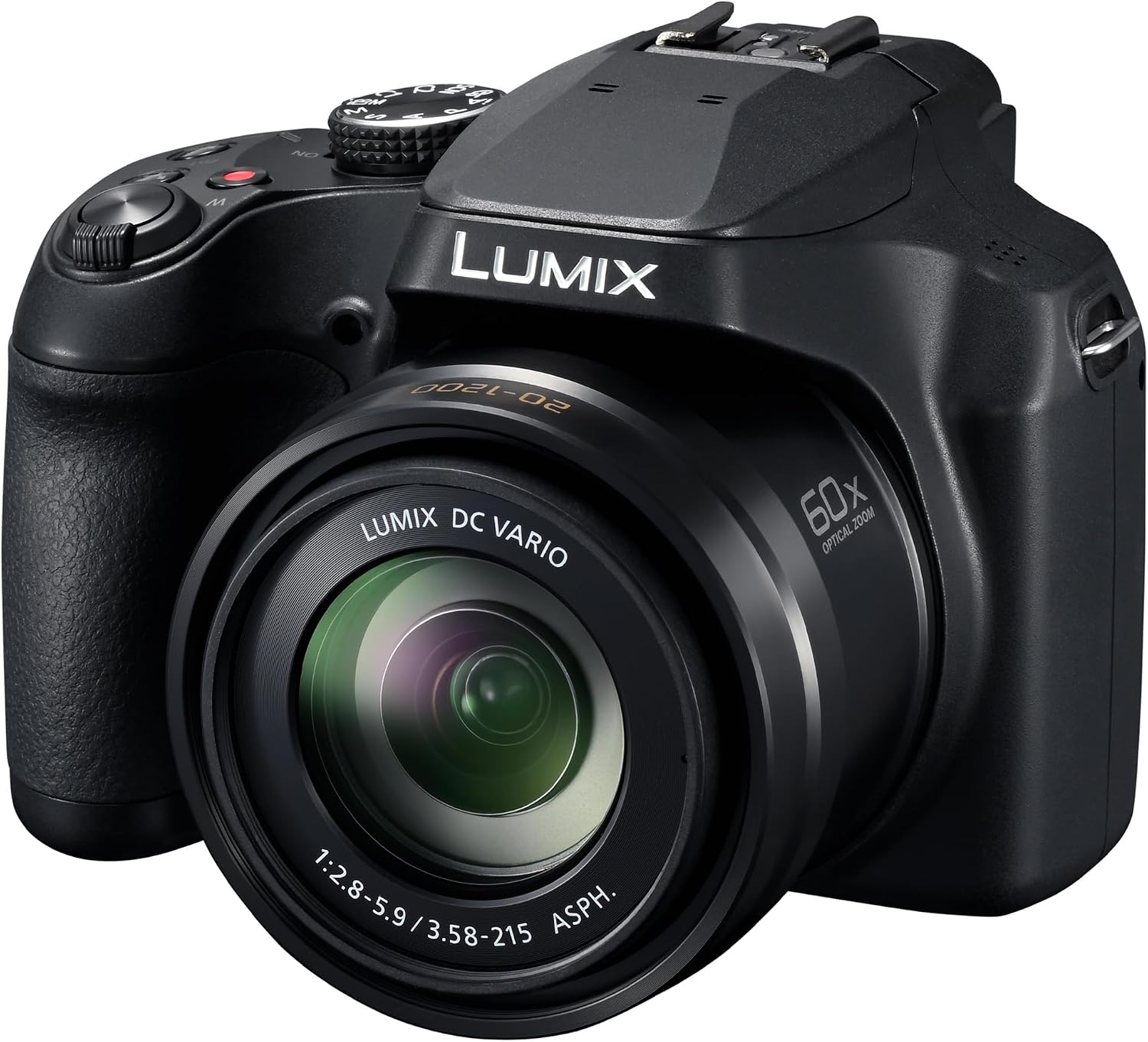
A “superzoom bridge camera” is exactly what the name suggests: a camera that bridges the gap between a basic point-and-shoot and a full interchangeable-lens system, with a built-in zoom lens powerful enough to fill the frame with a bird perched 200 feet away. You don’t swap lenses — the zoom range is built in, sometimes stretching from wide-angle to the equivalent of a 1,200mm telephoto, all in one body you can carry in a daypack. The trade-off is a smaller image sensor (the light-capturing chip inside) than you’d find in a mirrorless or DSLR camera. That matters, but it doesn’t disqualify the category — it just defines it. This article puts two of the most popular superzooms, the Panasonic Lumix FZ80D and the Canon PowerShot SX740 HS, under the editorial microscope using aggregated owner accounts, published specifications, and long-run reviews, so you can make a confident decision before spending your money.
If you’re standing at a decision point — wildlife trip booked, phone camera clearly not cutting it, but a mirrorless kit feels like overkill — this is written for you.
| EDITOR'S PICKCanon PowerShot SX740 HS Digita… | Mid-tierPanasonic LUMIX FZ80D Point and… | Budget pick[Kodak PIXPRO FZ55-BK 16MP CMOS](https://www.amazon.com/dp/B0GVGJQ6W3?tag=greenflower20-20)… | |
|---|---|---|---|
| Megapixels | 20.3MP | — | 16MP |
| Optical Zoom | 40x | 60X | 5X |
| Video | 4K UHD | 4K Photo/Video | 1080P Full HD |
| Stabilization | — | Optical | — |
| LCD Size | — | — | 2.7" |
| Card Included | ✓ (64GB) | — | — |
| Price | $999.99 | $547.99 | $139.99 |
| See on Amazon → | See on Amazon → | See on Amazon → |
What Owners Are Actually Buying These For
The owner record paints a remarkably consistent picture. FZ80D buyers are purposeful: hikers heading to Yellowstone who know a phone’s digital zoom is useless at 400 yards, birders who want reach without the logistics of a 600mm prime lens, and travelers who replaced a previous superzoom after it succumbed to a wet trail or a dropped pack. On the Canon side, SX740 HS owners are briefer in their reviews but consistent on two points: autofocus locks and tracks subjects faster than expected, and photo quality is clearly ahead of their phone cameras at zoom distances.
DPReview’s full review of the Panasonic Lumix FZ80D makes a point worth sitting with: this camera is built to solve a specific reach-and-portability problem, not to replicate what a large-sensor mirrorless system delivers. That framing resets expectations in exactly the right direction. PetaPixel’s long-term coverage of the Canon PowerShot SX740 HS surfaces a related observation — nobody buying a superzoom is confused about what it is. They’re solving for reach, portability, and price, in that order.
Sensor Size: The Honest Conversation
Both the FZ80D and SX740 HS use a 1/2.3-inch sensor. Photography Life’s explainer on bridge camera versus mirrorless sensor size puts the consequence plainly: smaller sensors collect less light per pixel, which produces more digital noise (graininess) in low-light conditions and at high ISO settings, and makes it harder to achieve strong subject-background separation at wide apertures. A Sony A6700’s APS-C sensor is roughly nine times larger in surface area. That gap is real.
At maximum zoom — and the FZ80D’s 60x optical zoom reaches an equivalent of 1,200mm — this limitation becomes most visible. Published specifications show the FZ80D’s maximum aperture at full telephoto is f/6.4. The Phoblographer’s analysis of 1/2.3-inch sensor behavior at high zoom confirms what owners consistently report: images at 1,200mm equivalent in flat midday light can be sharp and usable; images in overcast or golden-hour light often show noise and softness that post-processing can only partially rescue.
This is a trade-off, not a fatal flaw. A 600mm f/4 prime on a full-frame body will produce categorically better wildlife images — and will also cost upward of $13,000 for the lens alone, weigh over four kilograms, and require a gimbal head. The superzoom doesn’t replace that rig. It fills a gap that would otherwise cost significantly more to fill.
Head-to-Head: FZ80D vs. SX740 HS
Reach and Optical Power
Panasonic
$547.99
In stock on Amazon
Check price on AmazonThe FZ80D’s 60x zoom reaches a 1,200mm equivalent; the SX740 HS tops out at 40x, or 750mm equivalent. On paper the FZ80D wins clearly on reach. In practice, the gap matters most for specific scenarios: shorebirds at a marsh edge, elk across a wide valley, raptors circling at altitude. For urban wildlife, zoo photography, or general travel shots, 750mm already delivers more reach than most photographers use effectively.
DPReview’s FZ80D review notes that handholding at 1,200mm equivalent requires the camera’s optical image stabilization to do significant heavy lifting — and it largely delivers, but owners report needing deliberate technique (bracing, breath control, shutter timing) to produce reliably sharp frames at maximum extension. The SX740, operating at a more modest telephoto ceiling, demands less of its stabilization system and rewards less disciplined technique with fewer soft frames.
Specification comparison:
| Feature | Panasonic FZ80D | Canon SX740 HS |
|---|---|---|
| Sensor | 1/2.3-inch, 18.1MP | 1/2.3-inch, 20.3MP |
| Zoom range (equiv.) | 20–1,200mm (60x) | 25–750mm (40x) |
| Max aperture (tele end) | f/6.4 | f/6.9 |
| Video | 4K/30p | 4K/30p |
| Body weight | ~616g | ~299g |
Panasonic
$547.99
In stock on Amazon
Check price on AmazonPortability and Everyday Carry

Kodak
$139.99
In stock on Amazon
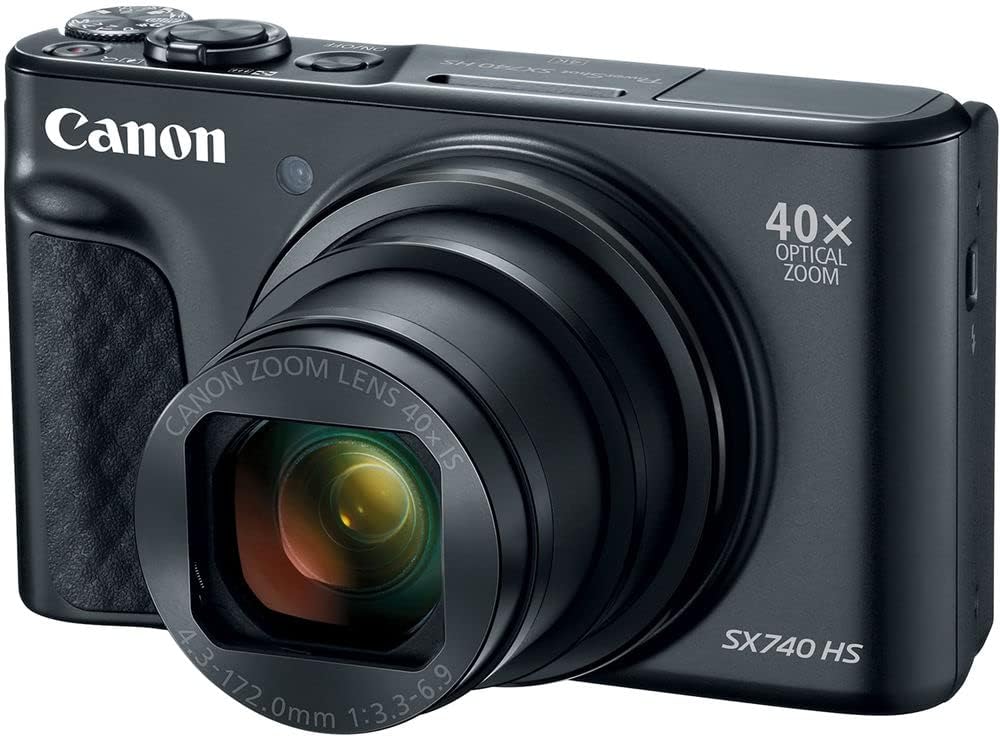
Check price on AmazonThe SX740 HS weighs roughly half the FZ80D — approximately 299g versus 616g — and fits in a jacket pocket. PetaPixel’s long-term owner coverage consistently identifies portability as the SX740’s most underrated practical advantage: it’s the camera that actually comes along on the day hike rather than staying in the car. For travel photographers whose primary constraint is bag space and carry weight, that difference changes real-world behavior in ways that a spec sheet can’t capture.
The FZ80D, by contrast, is a dedicated carry — it needs a dedicated spot in a daypack or a shoulder bag. Owners who bought it for Yellowstone or Costa Rica wildlife trips report that commitment as a non-issue. Owners who hoped to use it casually on city trips report reaching for their phone instead.
Kodak
$139.99
In stock on Amazon
Check price on AmazonAutofocus and Video Performance
Canon
$999.99
In stock on Amazon
Check price on AmazonOwner accounts give a consistent slight edge to the Canon SX740 HS for subject acquisition speed in tracking mode. For birds in flight — the hardest autofocus challenge in wildlife photography — neither camera approaches the performance of a Sony A6700 with real-time tracking or a Canon EOS R7. But SX740 owners repeatedly describe autofocus as “better than expected” for moving subjects, while FZ80D owners note that the system is capable but occasionally hunts at maximum zoom in lower-contrast light.
The Phoblographer’s analysis of small-sensor 4K video performance is instructive for anyone buying primarily for video. Both cameras shoot 4K at 30fps, which looks competitive on paper. In variable outdoor light, 4K from a 1/2.3-inch sensor will show visible noise, rolling shutter artifact on fast lateral movement, and dynamic range compression that clips bright skies against shadowed subjects. For YouTube wildlife logs, travel documentation, and family memory-making, that output is acceptable. For professional wildlife documentary work, it isn’t — and no superzoom in this price bracket pretends otherwise.
Outdoor Photographer’s superzoom buyer’s guide draws the line precisely: the superzoom category earns its place when achieving equivalent reach on a mirrorless system would exceed the buyer’s total budget by a factor of three or more. At current pricing, that threshold holds firmly. A 600mm-equivalent telephoto lens for an APS-C mirrorless body starts at roughly $500 used for entry-level optical quality and rises steeply from there. The FZ80D delivers 1,200mm equivalent for less than that, all-in.
Canon
$999.99
In stock on Amazon
Check price on AmazonWhen a Superzoom Makes Sense — And When It Doesn’t
Buy the Panasonic FZ80D if:
- You’re taking dedicated wildlife trips — national parks, bird reserves, African safari — where reach is the primary variable
- You want 4K video capability alongside stills and understand the small-sensor ceiling going in
- You’re replacing a prior superzoom and already have calibrated expectations for image quality
- Your budget sits in the $300–$450 range and a used telephoto mirrorless kit isn’t realistically on the table
Buy the Canon SX740 HS if:
- Travel portability is the binding constraint — you need a camera that fits in a pocket and comes along every day
- 40x zoom is sufficient reach for your primary destinations (most travel and urban wildlife scenarios)
- You’re a phone-first photographer ready to step up, and the learning curve of a larger system feels like a barrier right now
Consider a mirrorless alternative if:
- You already own an APS-C or full-frame mirrorless body — a used 100–400mm zoom on your existing mount will outperform either superzoom in image quality and autofocus, often at comparable or lower total cost when purchased through certified-used platforms
- You’re shooting in low light regularly (evening safaris, dense forest canopy, dusk bird activity), where the small-sensor noise ceiling will consistently frustrate you
- You want a system you can grow into rather than one with a fixed optical and sensor ceiling
Photography Life’s bridge camera analysis makes the point directly: the question isn’t whether superzooms are good cameras. They are good cameras for a specific problem. The question is whether your problem is the one they solve.
Frequently Asked Questions
Is the Panasonic FZ80D good for bird photography? For birds at distance in good light — perched birds, wading shorebirds, birds of prey on fence posts — owners consistently report satisfying results. For birds in flight, the FZ80D’s autofocus tracking is workable but not reliable enough for consistent keeper rates under real field conditions. If flying birds are your primary subject, the sensor size and AF speed limitations will frustrate you over time. If stationary or slow-moving birds in good daylight are the goal, the FZ80D’s reach advantage is genuine and meaningful.
How does the small sensor affect image quality at maximum zoom? At 1,200mm equivalent on the FZ80D, the camera is working at a narrow maximum aperture (f/6.4) under real-world variable lighting. Photography Life’s sensor size explainer and consistent owner review patterns both confirm: midday, high-contrast images can be sharp and clean; overcast, golden-hour, or backlit images will show noise and reduced sharpness that cannot be fully corrected in post-processing. You will get usable wildlife shots regularly and excellent ones in favorable conditions.
Can the Canon SX740 HS replace a smartphone for travel? For travel photography that includes any distance subject — architecture across a plaza, wildlife, candid street portraits, sports — the SX740 clearly outperforms a smartphone at zoom. For casual close-range shots, a modern flagship phone produces comparable or superior results due to computational photography processing. The SX740 earns its place specifically when reach matters, which on most serious travel itineraries is frequently.
Does the FZ80D shoot good video for wildlife? For personal use, YouTube, and social media, owners report satisfying 4K footage in good light. The Phoblographer’s small-sensor video analysis is clear: expect visible noise in variable light, dynamic range compression, and rolling shutter artifact on fast lateral movement. For professional wildlife documentary applications, a larger-sensor dedicated video option is the honest recommendation. The FZ80D’s video capability is a genuine bonus feature for stills-primary users, not a professional video solution.
Is a superzoom worth buying if I already own a mirrorless kit? Almost certainly not as a primary addition. If your mirrorless system accepts a 100–400mm or longer telephoto, that path delivers better image quality and better autofocus at every focal length. The only rational case for adding a superzoom to an existing mirrorless kit is as an ultralight backup for hiking days when you won’t carry the full rig — and even then, the value proposition is marginal compared to investing in a second telephoto that works natively with your existing mount.