September 20, 2026 • Declan Marsh • 10 min reading time • Prices verified June 11, 2026
The One-Lens Travel Kit: Tamron 17-70mm vs. 28-75mm for Sony E-Mount

Packing a single lens for a trip is one of those decisions that sounds simple until you’re standing in a camera store trying to justify why you need two zooms in your carry-on. The idea is to find one lens — a zoom lens, meaning it covers a range of focal lengths rather than being fixed at one — that handles everything from wide street scenes to tighter portraits without forcing you to swap glass. For Sony E-mount shooters, two Tamron lenses keep surfacing as the answer: the 17-70mm f/2.8 Di III-A VC RXD and the 28-75mm f/2.8 Di III VXD G2. Both offer a fast f/2.8 aperture (that’s the opening inside the lens that controls how much light gets in — bigger = better in dim rooms and at night), and both come in well under the price of comparable Sony first-party glass. The question is which one fits your body and your trip.
If you’re shooting a Sony APS-C body — the a6400, a6700, ZV-E10 — and you want the widest possible range in a single lens, read closely. If you’re already thinking about moving to full-frame or you shoot a mix of stills and video, the answer shifts. Let’s work through it.
| EDITOR'S PICK[Sony Alpha 6700](https://www.amazon.com/dp/B07NP7JPDC?tag=greenflower20-20) – APS-C Interch… | Mid-tier[Sony Alpha a6400 Mirrorless Cam](https://www.amazon.com/dp/B0DKL5JNTM?tag=greenflower20-20)… | Budget pick[Tamron 17-70mm f/2.8 Di III-A V](https://www.amazon.com/dp/B08YNG46L7?tag=greenflower20-20)… | |
|---|---|---|---|
| Sensor | 26 MP APS-C | APS-C | — |
| Lens included | — | ✓ | — |
| Max aperture | — | — | f/2.8 |
| Focal length | — | 16-50mm | 17-70mm |
| Video | 4K | 4K | — |
| Price | $1,498.00 | $857.00 | $699.00 |
| See on Amazon → | See on Amazon → | See on Amazon → |
The Core Trade-off in Thirty Seconds
Before the nuance: these are different lenses designed for different sensor sizes, and that single fact drives almost every other decision.
| Tamron 17-70mm f/2.8 | Tamron 28-75mm f/2.8 G2 | |
|---|---|---|
| Sensor compatibility | APS-C only | Full-frame + APS-C |
| Equivalent field of view (APS-C) | ~25–105mm | ~42–113mm |
| Built-in stabilization | Yes (VC) | No |
| Weight | ~525g | ~540g |
| Street price (mid-2026) | ~$499–$529 | ~$599–$649 |
The 17-70mm gives you a genuinely wide angle on APS-C — the “APS-C” sensor is the smaller sensor format in bodies like the a6700, roughly 1.5× smaller than a full-frame sensor. The 28-75mm starts noticeably tighter (equivalent to about 42mm on APS-C), which means you’re giving up real estate on the wide end. That gap matters in tight alleyways, interiors, and group shots.
Head-to-Head: Three Shooting Scenarios
H3 — Wide-End Range and Coverage
Going from 17mm to 28mm on an APS-C body is not a small step. With the 1.5× crop factor applied, the 17-70mm opens at roughly 25mm equivalent — close to classic wide-angle territory. The 28-75mm starts at roughly 42mm equivalent, which is essentially a “normal” or slight portrait perspective. You cannot fake those extra millimeters by stepping backward in a small room or a narrow street.
Photography Life’s review of the Tamron 17-70mm f/2.8 (titled “Tamron 17-70mm f/2.8 Review”) calls the wide end genuinely useful and names the focal range as one of the lens’s headline strengths for APS-C shooters. The 17-70mm holds f/2.8 across its entire range, unlike kit lenses — the basic 16-50mm or 18-55mm included with many Sony APS-C bodies — that typically shrink to f/5.6 at the long end, limiting you in low light.
The 28-75mm G2, by contrast, is not trying to be wide. Its strength is on the portrait and short-telephoto end. The Phoblographer’s review of the Tamron 28-75mm f/2.8 Di III VXD G2 praises its rendering at 50–75mm and describes the autofocus as fast and near-silent. Working photographers shooting on-location portraits with the 28-75mm consistently gravitate toward it for the compression and subject separation at the longer end.
If your travel style involves architecture, landscapes, interiors, or street: the 17-70mm’s wide end is not optional — you’ll feel the missing millimeters every time with the 28-75mm.
If your travel style skews toward people, markets, and candid portrait moments: the 28-75mm’s tighter range and smoother rendering matter more than the missing wide angle.

Sony
$857.00
In stock on Amazon
Check price on AmazonH3 — Stabilization, IBIS, and the a6700 Question
The Tamron 17-70mm includes optical image stabilization (Tamron calls it VC — Vibration Compensation). This is a gyroscope-based mechanism inside the lens that reduces blur from camera shake. The 28-75mm G2 has no built-in stabilization.
Body choice complicates the math here. The Sony a6700 — released in 2023 and still the flagship APS-C body heading into 2026 — includes in-body image stabilization (IBIS). When you pair the 17-70mm’s lens-based VC with the a6700’s IBIS, they work together in a coordinated system. DPReview’s Tamron 17-70mm f/2.8 Di III-A VC RXD review notes the VC is genuinely effective, though some users report that combined lens-plus-body stabilization can produce a slight correction artifact in video compared to IBIS-only operation.
For the a6700, the 17-70mm’s VC is useful but not a headline differentiator — the body’s IBIS handles a substantial portion of the work regardless of which lens you mount. For the a6400, which has no IBIS, the 17-70mm’s VC becomes meaningfully more important. The 28-75mm on an a6400 is working without any stabilization net — manageable in daylight, more limiting after dark or at slower shutter speeds.
Sony
$857.00
In stock on Amazon
Check price on AmazonH3 — Video Autofocus and the Full-Frame Upgrade Path
Video autofocus is one of the cleaner differentiators between these two lenses. The 28-75mm G2’s autofocus motor — VXD, which stands for Voice-coil eXtreme-torque Drive — is faster and quieter than the 17-70mm’s RXD motor. The Phoblographer’s review of the G2 specifically describes its AF as “near-silent” in video contexts, which matters because onboard microphones pick up lens motor noise during recording. The 17-70mm’s RXD motor is capable but can produce audible focus movement in quiet environments, which is relevant if you’re recording with the camera’s built-in microphone or a small external mic without full isolation.
Photography Life’s Tamron 17-70mm f/2.8 review acknowledges the autofocus performs well for stills but notes that the VXD-generation motor in G2-class Tamron lenses represents a meaningful step forward in tracking speed and quiet operation for video users.
The full-frame upgrade path is the question that almost never comes up in the store but matters twelve months later. The Tamron 17-70mm is an APS-C-only lens. If you mount it on a full-frame Sony body — an a7 III, a7 IV, a7C II, or a1 — the camera will either crop to APS-C mode automatically or you’ll see heavy vignetting, meaning dark edges, across the frame. It is not a full-frame lens.
The 28-75mm G2 is a full-frame native lens. It works on any Sony E-mount body without restriction. LensRentals, in their blog coverage of Sony E-mount lens rental volume trends, has noted that the 28-75mm line — original and G2 combined — represents one of the most-rented Sony-mount zoom lenses in their fleet. That rental volume across a wide range of shooter types signals the lens’s relevance at multiple body levels, not just APS-C. If you’re shooting an a6700 today and have even a reasonable chance of moving to a full-frame body in the next two to three years, the 28-75mm G2 makes that transition with you. The 17-70mm does not.
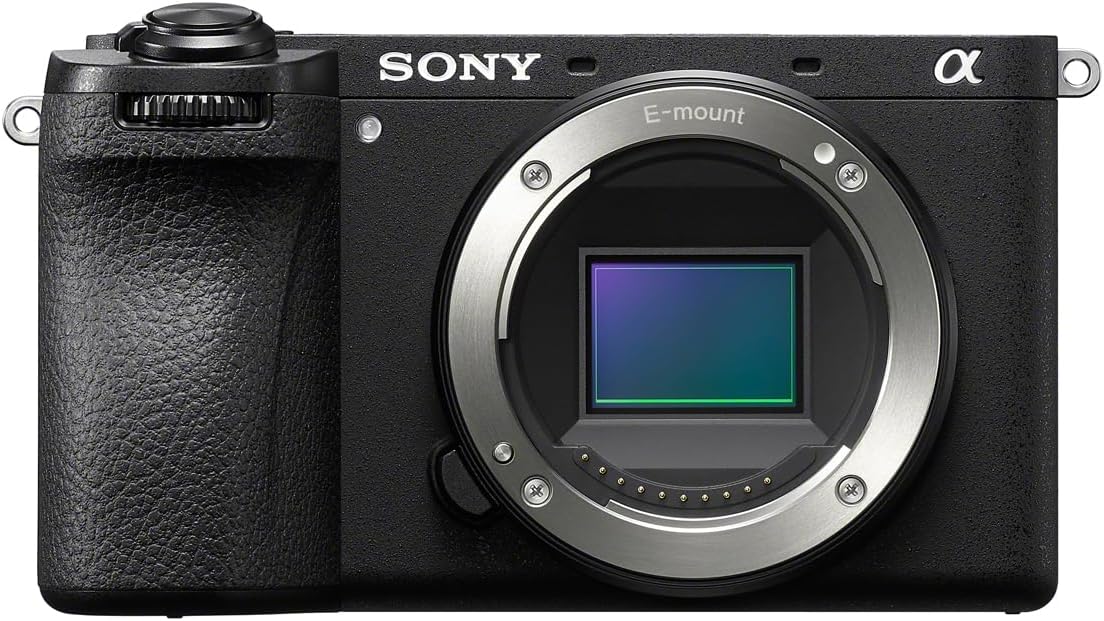
Sony
$1,498.00
In stock on Amazon
Check price on AmazonOptical Quality: What the Reviews Actually Show
Both lenses are optically strong for their price class, but the character of their performance differs. DPReview’s coverage of the 17-70mm finds center sharpness strong from wide open, with some expected softness in the extreme corners at the widest focal lengths — a normal trade-off in this price range. The lens’s optical stabilization does not noticeably degrade image quality versus the unstabilized result.
The Phoblographer’s Tamron 28-75mm G2 review documents that the G2 generation improved corner sharpness and edge performance relative to the original 28-75mm, with center performance being strong from f/2.8 across the range. LensRentals’ optical bench coverage, published on the LensRentals blog under their lens comparison series, supported the G2 representing a genuine optical upgrade over the original rather than just a motor and feature refresh.
For travel photography — mixed conditions, varied subjects, often handheld — both lenses deliver results that exceed what you’d expect at their price points. The optical differences between them are more relevant in controlled, critical-use scenarios like architecture or product photography than in the field.
Can Either Lens Replace a 50mm Prime for Portraits?
Honestly? Not quite — but they’re closer than the spec sheet implies. A dedicated 50mm prime (fixed focal length, typically with a wider maximum aperture like f/1.4 or f/1.8) produces shallower depth of field and smoother background blur than either Tamron can manage at f/2.8. That creamy out-of-focus background that portrait photographers chase requires a wider aperture or longer focal length than either zoom can provide at this price tier.
That said, the 28-75mm G2 at 75mm f/2.8 produces background separation that is workable for location portrait work. The 17-70mm at 70mm f/2.8 on APS-C — equivalent to roughly 105mm — gives you additional subject magnification that helps isolate subjects against backgrounds.
For a travel kit where you’re shooting friends, family, street vendors, or environmental portraits, either lens handles it without issue. If portraits are the primary use case and you want prime-quality background rendering, a dedicated portrait prime is still the better tool — neither zoom fully substitutes for it.
Frequently Asked Questions
Does the Tamron 17-70mm work on the Sony a7 IV or a7 III full-frame bodies? Not properly. The 17-70mm is designed for APS-C sensors. On a full-frame Sony body, the image circle the lens projects isn’t large enough to cover the sensor — you’ll get heavy vignetting or the camera will automatically switch to APS-C crop mode, reducing your effective resolution significantly. If you shoot or plan to shoot full-frame, this lens is not compatible with that upgrade path.
Does the 17-70mm’s built-in VC matter on the a6700, which has IBIS? It helps at the margins but is not the decisive factor. The a6700’s in-body stabilization already handles most handheld shooting scenarios. The VC adds cooperative benefit in specific conditions — longer focal lengths, very low light — but the a6700’s IBIS is capable enough that the VC is not the primary reason to choose this lens. The wide-angle range is.
Is the 28-75mm G2 noticeably sharper than the original 28-75mm? Yes, particularly at the edges and corners. Both The Phoblographer’s G2 review and LensRentals’ optical bench coverage document that the G2 is a genuine optical improvement over the original, not just a motor upgrade. Center sharpness was strong in both generations; corner performance is where the G2 advances most clearly.
Which lens is better for video autofocus on the a6400? The 28-75mm G2, based on its VXD motor being faster and quieter. The Phoblographer’s G2 review describes AF tracking as near-silent in video use. The 17-70mm’s RXD motor is competent for stills but can produce audible focus noise in quiet recording environments.
Can either lens replace a 50mm prime for portraits? They can approximate the look, particularly at longer focal lengths and f/2.8, but neither will match a dedicated f/1.4 or f/1.8 prime for background separation and low-light capability. For travel portrait work — environmental, candid, and lifestyle — both lenses are more than adequate. For shallow-depth-of-field work as the primary creative goal, a dedicated prime remains the right tool.
The Decision Rule
If you shoot APS-C now and plan to stay on APS-C: the Tamron 17-70mm f/2.8 is the stronger travel lens. The wide end is irreplaceable for street, architecture, and interiors. Holding f/2.8 across the full range matters more than extra reach at the long end, and the VC provides a meaningful safety net on bodies without IBIS.
Sony
$857.00
In stock on Amazon
Check price on AmazonIf you shoot APS-C now but realistically plan a full-frame upgrade in the next two to three years: buy the 28-75mm G2. It travels with you to the next body without restriction. The tighter wide end is a genuine trade-off, but you’re purchasing future compatibility, a superior autofocus motor for video, and a lens that performs at the full-frame level when you get there.
Sony
$1,498.00
In stock on Amazon
Check price on AmazonIf you shoot video on an a6400 and audio quality matters: the 28-75mm G2’s quieter AF makes it the practical choice regardless of the focal length question. Lens motor noise in onboard audio is a real production problem; the G2’s VXD motor largely eliminates it.
Sony
$857.00
In stock on Amazon
Check price on AmazonBoth are honest, well-built lenses at prices that make the Sony first-party alternatives harder to justify. The “wrong” choice here is not a disaster — it’s a resale and upgrade situation. But buying the right one the first time saves you that headache.