June 22, 2026 • Declan Marsh • 10 min reading time • Prices verified June 11, 2026
Tamron vs. Sony Lenses for Sony E-Mount: Where the Real Money Goes

If you own a Sony camera — whether it’s a compact APS-C body like the a6700 or a full-frame powerhouse like the a7 IV — the most important purchase decision after the camera itself is which lenses to buy. The lens is what actually shapes your image: it controls how much light reaches the sensor, how blurry the background gets (what photographers call “bokeh”), and how fast the camera locks focus on a moving subject. Sony makes its own lenses for the E-mount system (the connector type on all Sony mirrorless cameras), but a Japanese optics company called Tamron has built an entire lineup of E-mount lenses that often cost significantly less and, in specific shooting conditions, outperform their Sony equivalents. This article maps the real decision: when does buying Tamron make sound financial sense, and when is Sony glass worth the premium?
This isn’t a “Tamron is better” or “Sony is better” argument — it’s a decision framework. The right answer depends on what camera body you own (APS-C vs. full-frame is a critical fork in the road), what you shoot, and how you weigh portability against optical performance. The comparisons below are organized by tier so the upgrade path is clear at every budget level.
The APS-C Battleground: Walk-Around Zooms
Budget Tier: Sony E 18-135mm f/3.5-5.6 OSS
For APS-C shooters who work primarily outdoors in good light and want maximum reach at minimum cost, the Sony E 18-135mm f/3.5-5.6 OSS is the practical starting point. It’s lightweight, covers a versatile range from wide-angle to short telephoto, and delivers respectable sharpness in favorable conditions. The limitation surfaces the moment light drops: the variable aperture reaches f/5.6 at the long end, meaning in shade, indoors, or past the golden hour, you’re choosing between higher ISO noise and motion blur.

SONY
$217.43
In stock on Amazon
Check price on AmazonMid-Tier: Tamron 17-70mm f/2.8 Di III-A VC RXD
The Tamron 17-70mm f/2.8 Di III-A VC RXD is the lens that defines the APS-C mid-tier argument. DPReview’s review of the Tamron 17-70mm f/2.8 Di III-A VC RXD highlights its optical quality relative to price, noting that sharpness across the frame is competitive with glass costing considerably more. The defining specification: f/2.8 held constant throughout the entire zoom range — a figure Sony does not offer in any native APS-C zoom at any price. Two stops more light than f/5.6 is not a marginal improvement; in practice it means shooting at ISO 800 instead of ISO 3200, which is a genuine image-quality difference rather than a spec-sheet one.
The one point worth stating plainly: this lens is engineered for APS-C sensors. It mounts and autofocuses on full-frame Sony bodies, but the camera automatically applies a crop, reducing effective resolution. APS-C shooters get everything the lens is designed to deliver; full-frame owners should evaluate different glass.
Sony SEL50F18F/2
$248.00
In stock on Amazon
Check price on AmazonPremium Tier: Sony FE 24-70mm f/2.8 GM II
For photographers who have outgrown APS-C or are already shooting full-frame, the Sony FE 24-70mm f/2.8 GM II is the professional benchmark in this focal range. It is native full-frame, covers 24mm on the wide end (versus the Tamron’s 28mm), and Sony’s engineering on the GM II produced a lens that is, unusually, lighter than the Tamron despite being a larger system. The street price in 2026 runs approximately $2,200 — a figure that is hard to justify when building a first kit, but that professional event and wedding photographers routinely cite as worthwhile once volume justifies the cost-per-shoot math.
Tamron
$1,099.00
In stock on Amazon
Check price on AmazonThe 50mm Prime Decision
Budget Tier: Sony E Kit Zoom at 50mm Equivalent
Shooting a 35mm lens on an APS-C body gives you roughly a 52mm equivalent field of view — close enough to “nifty fifty” territory that many new owners try to avoid buying a dedicated prime by staying in that focal range on their kit zoom. The honest assessment: at f/3.5-5.6, a kit zoom cannot reproduce the background separation or low-light performance of a true fast prime. The field of view overlaps; the rendering does not.
SONY
$217.43
In stock on Amazon
Check price on AmazonMid-Tier: Sony E 50mm f/1.8 OSS
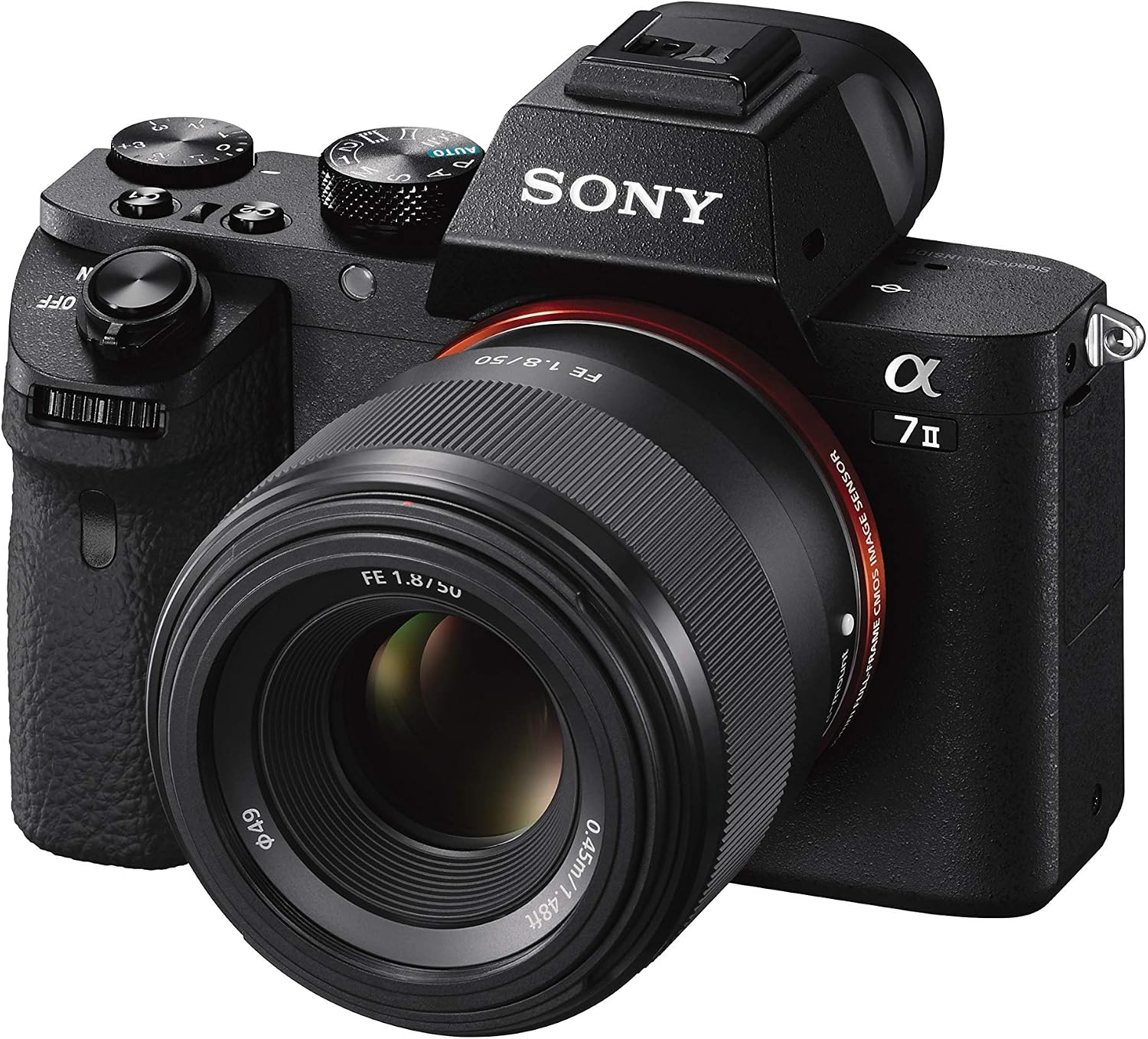
Photography Life’s overview of the Sony E 50mm f/1.8 OSS singles out two attributes: its weight of 186g and its fast, quiet autofocus, which make it a standout for portrait use on APS-C bodies. Owners consistently find the background blur at f/1.8 on a 50mm to be the specific quality upgrade that kit zooms cannot deliver at any focal length setting. This lens has no direct Tamron competitor in the APS-C prime category, which makes it the practical default rather than a compromise. At its price point, it is a genuine recommendation.
Sony SEL50F18F/2
$248.00
In stock on Amazon
Check price on AmazonPremium Tier: Sony FE 50mm f/1.2 GM
For full-frame shooters who want a portrait prime with maximum subject separation, the Sony FE 50mm f/1.2 GM is the premium option at this focal length. The f/1.2 aperture is a meaningful step beyond f/1.8 in terms of background rendering and low-light ceiling, and Sony’s GM optical formula is engineered to keep aberrations controlled wide open — a challenge that cheaper f/1.8 lenses handle with varying success. The price premium is substantial and is not justified for a first kit; it belongs at the point in a photographer’s development where they are actively limited by their current 50mm rather than their technique.
Tamron
$1,099.00
In stock on Amazon
Check price on AmazonThe Telephoto Decision: Reach vs. Aperture
Budget Tier: Sony E 55-210mm f/4.5-6.3 OSS
The Sony 55-210mm f/4.5-6.3 OSS is a capable kit telephoto that earns its recommendation specifically for outdoor daytime shooting — wildlife in open meadows, sports in afternoon sun, travel photography where weight matters as much as performance. LensRentals’ compatibility and usage notes on E-mount third-party lenses consistently reflect a pattern: photographers who start with the 55-210mm find it sufficient until they encounter low-light telephoto situations. At f/6.3 at 210mm, the aperture ceiling is real. Indoor sports, wildlife at dusk, and event photography push the lens past what it was designed to handle.
SONY
$217.43
In stock on Amazon
Check price on AmazonMid-Tier: Tamron 70-180mm f/2.8 Di III G2
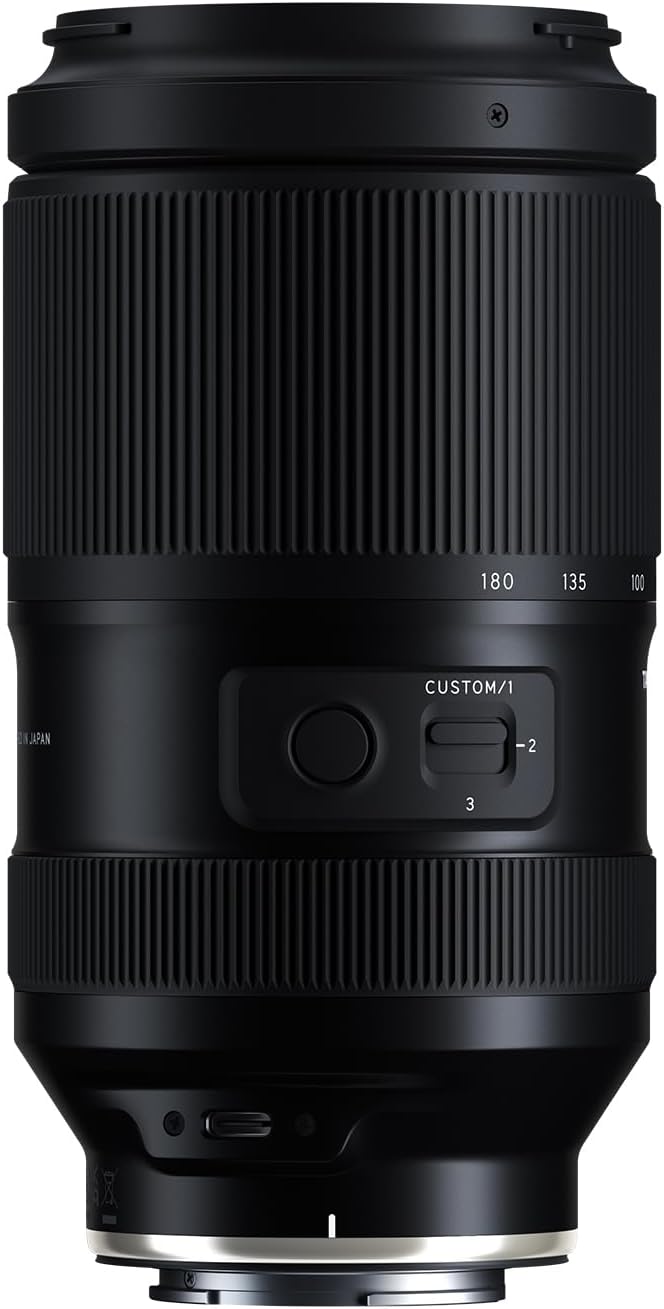
The Tamron 70-180mm f/2.8 Di III G2 exists in a categorically different performance tier than the 55-210mm. The Phoblographer’s review of the Tamron 70-180mm f/2.8 Di III G2 documents meaningful improvements in the G2 version over the original — specifically in autofocus speed and lens coating quality — and treats the f/2.8 constant aperture as the defining feature that makes it a workable telephoto in lighting conditions where the Sony 55-210mm becomes genuinely limiting.
The reach trade-off deserves direct acknowledgment: 180mm is shorter than 210mm, and well short of the 300mm some wildlife photographers want. On an APS-C body, the 1.5x crop factor brings 180mm to a 270mm equivalent, which helps for many subjects but does not fully close the gap for small birds at distance. Photographers who regularly shoot subjects that require maximum reach in bright conditions may find the Sony 55-210mm’s range more useful despite its aperture limitation. Photographers who shoot in variable or low light and can work within 270mm equivalent will find the Tamron 70-180mm G2 a meaningful, noticeable upgrade — not a marginal one.
Sony SEL50F18F/2
$248.00
In stock on Amazon
Check price on AmazonPremium Tier: Sony FE 70-200mm f/2.8 GM OSS II
For professional event, sports, and wildlife photographers on full-frame Sony bodies, the Sony FE 70-200mm f/2.8 GM OSS II is the telephoto standard. It delivers f/2.8 constant across a range that covers virtually all professional event and sports work, with Sony’s second-generation GM optical formula and an autofocus system tuned for tracking fast-moving subjects. The Tamron 70-180mm G2 competes strongly on price and optical quality in its range, but the Sony GM II’s additional 20mm of reach, weather sealing, and integration with Sony’s professional body ecosystem justify the premium for photographers whose income depends on reliable telephoto performance.
Tamron
$1,099.00
In stock on Amazon
Check price on AmazonFull-Frame Shooters: The Tamron 28-75mm G2 vs. Sony FE Options
For photographers building a first full-frame kit around bodies like the a7 IV or a7C II, the Tamron 28-75mm f/2.8 Di III VXD G2 is the most-discussed alternative to Sony’s own 24-70mm f/2.8 GM II. PetaPixel’s real-world review of the Tamron 28-75mm f/2.8 Di III VXD G2 returns to two points consistently: the optical quality is genuinely impressive for its price, and the weight becomes a real consideration over long shooting days. At approximately 540g, it is nearly 250g heavier than Sony’s f/4 kit zoom alternatives — reviewers who shoot full-day wedding and event work with the Tamron G2 specifically recommend a monopod as a fatigue management tool rather than simply a stability aid.
The starting price for the Tamron 28-75mm G2 runs approximately $800 in 2026, versus roughly $2,200 for the Sony 24-70mm f/2.8 GM II. That $1,400 difference, for photographers building a first professional kit, often makes more practical sense invested in a second prime or a dedicated portrait lens than in the weight and 4mm of wide-end coverage the Sony provides. For photographers who have identified the 24-70mm f/2.8 zoom as the daily workhorse of a professional kit, the Sony GM II’s weight advantage justifies the premium over years of regular use — the cost-per-shoot arithmetic shifts substantially as volume increases.
Frequently Asked Questions
Is the Sony 50mm f/1.8 worth buying if I already own a kit zoom?
Yes, with a specific caveat: a kit zoom’s variable aperture produces fundamentally different background blur and low-light performance than a 50mm prime at f/1.8. If your portraits look flat or busy in the background, the Sony 50mm f/1.8 is likely the fix — not because your kit lens is poorly made, but because the physics of f/5.6 do not produce f/1.8 results. If you primarily shoot landscapes or subjects where background separation doesn’t matter, the kit zoom covers the focal length adequately and the prime may not move the needle for your work.
Does the Tamron 17-70mm f/2.8 work on full-frame Sony bodies?
It mounts and autofocuses, but the camera automatically switches to APS-C crop mode, using only the center portion of the sensor and reducing effective resolution. It is not the intended use case. Full-frame Sony owners should evaluate the Tamron 28-75mm f/2.8 G2 instead.
When does the Sony 55-210mm kit telephoto become the limiting factor in a kit?
When your subjects are in shade, backlit, or you’re shooting past the golden hour. At f/6.3, the 55-210mm needs bright light to perform well. Indoor sports, wildlife at dusk, and event telephoto work surface this limitation faster than outdoor daylight shooting.
Is the Tamron 70-180mm f/2.8 G2 enough reach for wildlife and birds?
For wildlife that tolerates closer approach, or for APS-C bodies where 180mm becomes 270mm equivalent, it is workable — and the f/2.8 aperture makes it genuinely useful at dawn and dusk when many animals are most active. For small birds at significant distance or wildlife reserves where you shoot from fixed viewing areas, the reach will feel limiting. It is an honest trade, not a free upgrade.
The If/Then Decision Rules
If you’re on APS-C and shoot indoors or in mixed light: The Tamron 17-70mm f/2.8 changes what’s possible, not just what’s slightly better.
If you’re on APS-C and primarily shoot outdoors in good light: Sony’s 18-135mm gives more reach at less weight and cost. Save the difference.
If you want a portrait prime on APS-C: The Sony 50mm f/1.8 has no direct Tamron competitor — it’s the practical call, and a good one.
If you’re on full-frame and building a professional event kit: Start with the Tamron 28-75mm G2, bank the savings, and move to the Sony GM II when shooting volume justifies the weight-and-cost premium.
If you need a telephoto for anything other than bright daylight: The Tamron 70-180mm G2 is a real upgrade over the Sony 55-210mm, with the reach limitation being a genuine trade-off rather than a marketing footnote.
The through-line: Tamron earns its market share by targeting the specific aperture and price gaps Sony leaves open — especially in constant f/2.8 zooms at accessible prices. Sony earns its premium with weight engineering on flagship glass and a native prime lineup that Tamron does not fully replicate. Knowing which gap matters for your shooting is the decision.