June 4, 2026 • Declan Marsh • 9 min reading time • Prices verified June 11, 2026
Third-Party Batteries for Canon Mirrorless: How Much Should You Actually Spend?
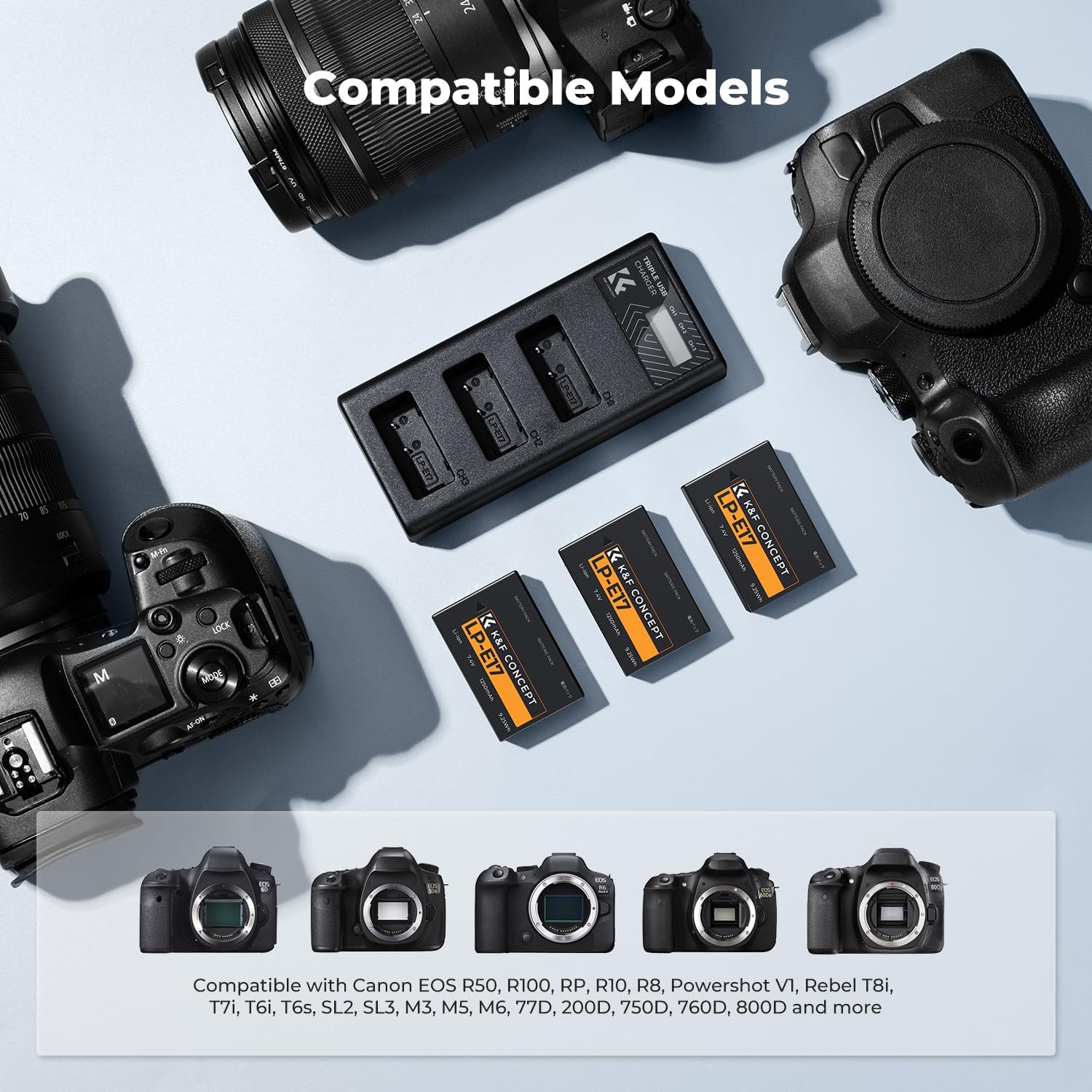
If you’ve just picked up a Canon mirrorless camera — or you’re seriously eyeing one — you’ve probably already heard that the battery life is the one place these cameras make you work harder than you’d like. “Mirrorless” simply means the camera uses an electronic viewfinder and sensor-based preview instead of a mirror and optical viewfinder, and that constant screen-and-sensor activity drains power faster than older DSLR designs. The fix is straightforward: carry more batteries. Canon’s own replacement cells cost roughly $60–$70 each at retail in 2026, which adds up fast if you want three spares for a full wedding day or a travel trip. Third-party batteries — made by independent manufacturers rather than Canon — promise the same energy capacity at a fraction of the price. The question worth asking before you click buy isn’t just “will this work?” It’s “which battery type does my specific camera actually use, and what does the real-world owner experience look like six months in?”
This guide focuses specifically on the LP-E17 battery, which powers the Canon EOS R50, R100, RP, R8, and R10 — the most popular Canon mirrorless bodies at the under-$1,000 price point. If you own an R6 Mark II or R7, stop here and read the compatibility note below first; those cameras use an entirely different battery and this article doesn’t apply to them.
The Battery Compatibility Trap: LP-E17 vs. LP-E6NH
This is the single most common mistake in this category, so let’s put it at the top.
Canon’s mirrorless lineup splits across two battery families that look superficially similar but are not interchangeable:
| Battery | Fits These Bodies |
|---|---|
| LP-E17 | R50, R100, RP, R8, R10 |
| LP-E6NH | R5, R5 Mark II, R6, R6 Mark II, R7, R3 |
The R8 creates particular confusion because it’s often described — accurately — as a more affordable entry into full-frame Canon mirrorless. DPReview’s Canon EOS R50 review and Photography Life’s Canon EOS R8 overview both note that these smaller-sensor or value-tier bodies use the LP-E17, not the larger LP-E6NH cell that powers their pro siblings. Reviewers at Photography Life specifically flag battery life as a known design compromise of the R8 — it’s a full-frame sensor in a compact body with a smaller battery slot, which means extra LP-E17 cells are more important for R8 owners than for almost any other Canon mirrorless shooter, not less.
The practical consequence: if you search “Canon mirrorless battery” without specifying your body, you will find LP-E6NH products ranked prominently because those bodies carry higher price points and more review traffic. Buying the wrong one means a dead purchase and a return. Check your camera’s manual or the battery grip well inside the door before you add anything to your cart.
What Third-Party LP-E17 Batteries Actually Cost — and What You Get
Canon’s OEM LP-E17 is rated at 1,040mAh. It retails for roughly $60–$65 as a single unit through Canon’s own storefront in mid-2026. A two-pack from Canon’s accessories line runs close to $100.
Third-party options cluster into two tiers:
By the numbers (May 2026 market):
- Canon OEM LP-E17 single: ~$62
- K&F Concept LP-E17 3-pack + 3-slot charger: ~$35–$40
- Wasabi Power LP-E17 2-pack + dual charger: ~$28–$32
- Generic no-brand single (no charger): ~$8–$12
The K&F Concept 3-pack is the product with the most consistent owner-review signal in this category. Across aggregated owner reviews for the product explicitly listed as compatible with the R50, R100, RP, R8, and R10, the pattern is notably clean for a third-party power product: owners consistently report that all three cells register without compatibility warnings on their cameras, runtime described as comparable to OEM through full-day shoots, and no reports of swelling, overheating, or camera damage in the available sample. The 3-slot charger is repeatedly called out as the standout feature for travelers — you can top off all three cells overnight from a single wall outlet, a logistical advantage the OEM single charger doesn’t offer.
That said, the honest framing here is that owner-review samples skew toward early adopters who are motivated to report back. Long-run failure rates for third-party lithium cells across all brands are harder to track than first-month impressions. The absence of reported swelling in the current review pool is meaningful but not a guarantee across years of thermal cycling.
The R8 Case: Why Battery Count Matters More on Some Bodies
It’s worth dwelling on the R8 specifically because it occupies a peculiar position in Canon’s lineup. The Phoblographer’s Canon EOS R10 review and Photography Life’s R8 overview both frame the value proposition similarly: you’re getting meaningful image quality at a price point that required engineering compromises, and battery runtime is near the top of that compromise list.
The R8 ships with an LP-E17 — the same cell as the entry-level R50, in a body that handles full-frame autofocus loads and faster continuous shooting bursts. The CIPA rating (an industry-standard battery-life benchmark measured in a controlled sequence of shots) for the R8 is one of the lowest in Canon’s full-frame lineup. Reviewers at DPReview’s Canon EOS RP coverage note similar dynamics on the older RP. If you’re shooting a four-hour portrait session or an all-day event, one battery is not a plan — it’s a risk.
Running the math: at ~$62 per OEM cell, three batteries costs you ~$186 beyond camera purchase. The K&F 3-pack at ~$38 is a $148 delta on an accessory purchase that protects a much larger investment. If the third-party cells deliver 85–90% of OEM runtime per charge (a figure consistent with owner reports, though not an independently verified lab figure), the cost-per-usable-shot math heavily favors the third-party route for shooters who aren’t billing professional clients who expect zero gear failures.
The calculus shifts at the professional end. A working wedding photographer billing $3,000–$5,000 per event has asymmetric downside: a single battery failure during the first dance costs more in reputation than the entire price difference between OEM and third-party for a year. That photographer probably wants OEM primaries and carries third-party as overflow. A hobbyist R50 owner shooting weekend hikes has a very different risk profile.
Does Your Camera Flash a Warning for Third-Party Batteries?
This is the number-one question that separates a genuine purchase concern from an anxiety that doesn’t need to gate your decision.
Canon has, in various firmware versions and body generations, displayed a warning message when a non-OEM battery is inserted — something along the lines of “battery communication error” or “non-genuine battery detected.” The critical nuance is that this message is informational, not functional on most current bodies. Owners of the R50 and RP specifically — the two bodies with the most owner review volume for the K&F LP-E17 product — consistently report that the batteries are recognized without triggering that warning on their cameras. This is called out explicitly in multiple reviews as the concern that almost stopped the purchase.
It’s worth knowing that Canon’s approach to third-party battery warnings has varied by firmware version. DPReview’s Canon EOS RP field notes reference the battery warning behavior in the context of third-party cells. If you update firmware after purchasing third-party batteries, it’s worth a quick test to confirm recognition behavior hasn’t changed — a 30-second check after any firmware update is a reasonable habit.
Frequently Asked Questions
Will third-party batteries trigger a warning message on the Canon R50 or RP? Based on aggregated owner reports for LP-E17 products listed as compatible with the R50 and RP, the answer for well-regarded third-party brands is generally no — cameras recognize the cells without a compatibility error. This is the specific concern most buyers flag before purchasing and the specific outcome most report back on. That said, Canon firmware updates can change this behavior, so verify after any update.
How many shots can I expect from one K&F LP-E17 charge compared to the Canon OEM? The Canon OEM LP-E17 is rated at 1,040mAh, and CIPA shot counts vary by body: the R50 is rated around 260 shots per charge under CIPA conditions, the RP around 250. Owners report that third-party LP-E17 cells from K&F perform comparably through full-day shoots, though individual variance depends on how much you rely on the EVF versus LCD, video recording time, and temperature. No independently verified lab comparison exists in the published record — the owner-report signal is the most reliable data available.
Does the multi-slot charger work with OEM and third-party batteries at the same time? Yes. The K&F 3-slot charger is designed to accommodate LP-E17 cells regardless of manufacturer, and owners report mixing OEM and third-party cells in the same charging session without issue. This is one of the most practical advantages of the bundle: your existing Canon cell and two new third-party cells can all charge simultaneously overnight.
Is the LP-E17 compatible with the R6 Mark II and R7, or do those bodies need a different battery? Different battery entirely. The R6 Mark II and R7 use the LP-E6NH, which is physically larger and not interchangeable with the LP-E17. Buying LP-E17 cells for either of those bodies is a dead purchase. Confirm your battery type in your camera manual or on the battery compartment door before ordering anything.
How should I store spare batteries when traveling for several days? The standard guidance from Canon’s battery documentation and broadly echoed across photography travel resources: store lithium-ion cells at roughly 40–60% charge if they’ll sit unused for more than a few days, keep them in a cool and dry location away from metal objects that could short the contacts, and use a hard case or dedicated battery sleeve to prevent contact with keys or loose change in a bag. For carry-on air travel, lithium-ion cells must stay in your carry-on rather than checked luggage per TSA and IATA rules — this applies to both OEM and third-party cells.
The Decision Rule
If you own an R50, R100, RP, R8, or R10 and you’re shooting anything longer than a casual afternoon outing, the third-party LP-E17 multi-pack is the right call for most buyers. The cost-per-cell math is decisive, owner-report compatibility on current Canon bodies is solid, and the multi-slot charger solves a real travel logistics problem the OEM single charger doesn’t address.
If you’re a working professional with revenue on the line at the shoot, keep at least one OEM cell as your primary and treat the third-party pack as your overflow insurance. The risk asymmetry justifies the premium for the cell you’re counting on most.
If you own an R6 Mark II or R7, none of this applies to you — you need LP-E6NH cells, and the buyer research process starts over from scratch with that battery type.
The one mistake worth avoiding in this category isn’t the OEM-versus-third-party question. It’s buying the wrong battery type for your camera entirely, a mistake that’s easy to make and completely avoidable if you check the label on your battery door before you order.