May 20, 2026 • Declan Marsh • 11 min reading time • Prices verified June 11, 2026
Third-Party Lenses for Fujifilm X-Mount: Viltrox, Rokinon, Meike, and TTArtisan Compared
If you shoot with a Fujifilm X-series camera — the bodies that use what Fujifilm calls the “X-mount” lens connection — you already know the native glass is excellent. But “excellent” often means $400 to $1,400 per prime lens, which adds up fast when you’re still figuring out which focal lengths actually fit your shooting style. That’s where third-party lenses come in: optics made by independent manufacturers designed to physically and electronically attach to the same Fujifilm bodies, usually at 30–70% less than the equivalent native option. The trade-offs are real — autofocus speed, build quality, and resale value all shift — but so is the savings. This article compares four brands you’ll encounter constantly at this price tier: Viltrox, Rokinon, Meike, and TTArtisan. If you have a decision pending right now, here’s the honest framework for making it.
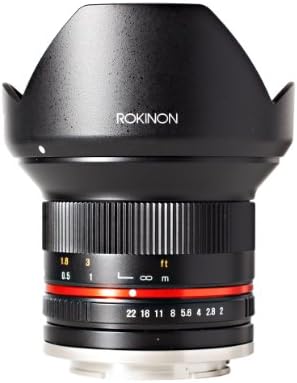
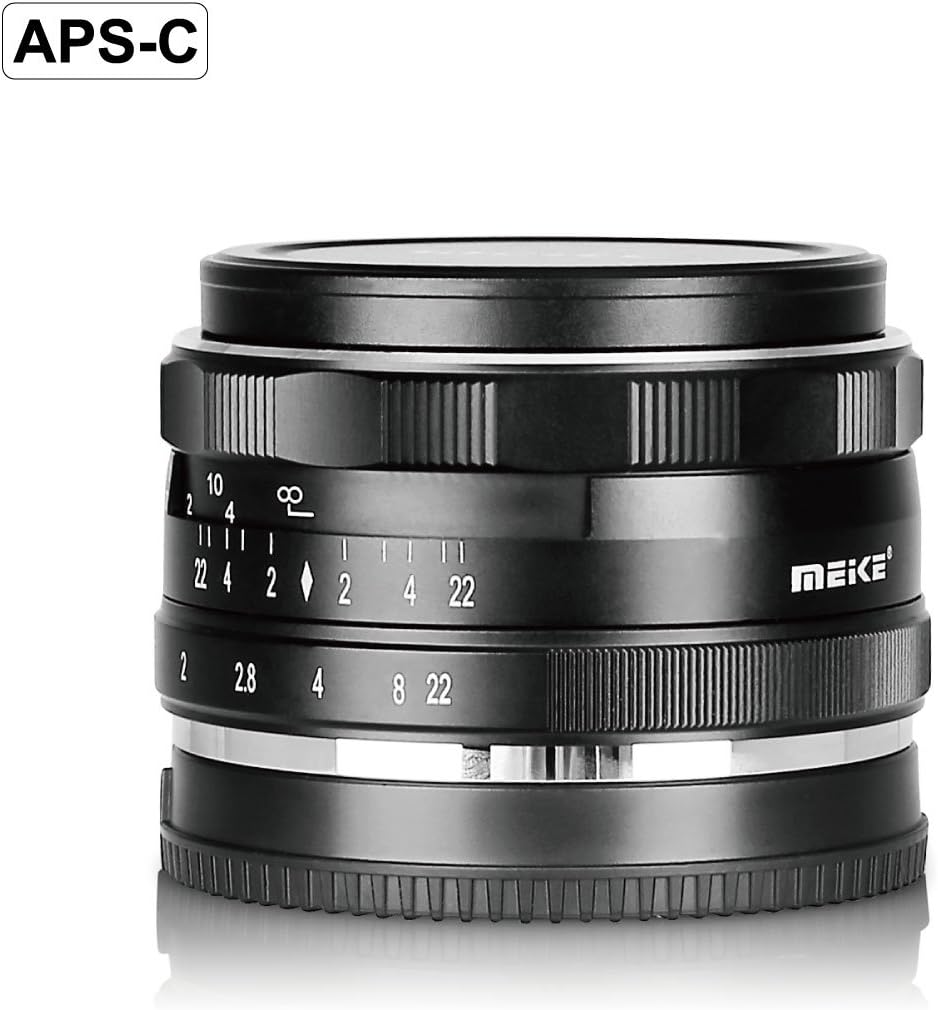
| EDITOR'S PICK[Rokinon 12mm f/2.0 NCS CS Wide…](https://www.amazon.com/dp/B00JD4TA9G?tag=greenflower20-20) | Mid-tier[TTArtisan AF 27mm F2.8 f/2.8 XF…](https://www.amazon.com/dp/B0DCVQSVQY?tag=greenflower20-20) | Budget pick[Meike 35mm f1.7 Large Aperture…](https://www.amazon.com/dp/B01DJ3ZA3Q?tag=greenflower20-20) | |
|---|---|---|---|
| Aperture | f/2.0 | f/2.8 | f/1.7 |
| Focal Length | 12mm | 27mm | 35mm |
| Focus Type | Manual | Auto (STM) | Manual |
| Coating | Nano Coated | — | — |
| Price | $219.00 | $159.99 | $69.99 |
| See on Amazon → | See on Amazon → | See on Amazon → |
The Landscape: What You’re Actually Choosing Between
Third-party X-mount lenses in 2026 fall into roughly two categories: autofocus lenses with electronic aperture control (Viltrox is the dominant player here) and manual-focus-only lenses where you set aperture and focus distance yourself (Rokinon, Meike, and TTArtisan occupy this space, with TTArtisan increasingly bridging into AF territory on select focal lengths).
Neither category is automatically worse. The calculus depends on what you’re shooting:
- Autofocus primes suit portrait, street, and documentary work where you need responsive tracking and don’t want to slow down.
- Manual-focus primes suit landscape, architecture, astrophotography, and deliberate studio work where you’re controlling every variable anyway.
The brands covered here collectively offer lenses from around $60 to $350 — a range where you can pick up two or three lenses for what a single Fujifilm XF prime costs.
Approximate 2026 street prices:
| Lens | Type | Price Range |
|---|---|---|
| Rokinon 12mm f/2.0 | Manual focus | ~$290–$320 |
| Meike 35mm f/1.7 | Manual focus | ~$60–$80 |
| TTArtisan 27mm f/2.8 | Autofocus | ~$100–$130 |
| Viltrox 35mm f/1.7 AF | Autofocus | ~$200–$270 |
| Viltrox 28mm f/4.5 pancake | Autofocus | ~$150–$200 |
The Budget Tier: Meike and TTArtisan
Meike 35mm f/1.7: The Entry-Level Prime Argument
Meike occupies the most aggressive price point of the four brands. The 35mm f/1.7 — which produces a roughly 52mm full-frame equivalent on X-mount, putting it squarely in classic “nifty fifty” territory — consistently surfaces in owner reviews as a deliberate first upgrade from the kit zoom.
PetaPixel, in their feature “Budget Mirrorless Lenses: What Owners Actually Report After Six Months,” identifies a clear pattern across owner reports: buyers who understood the manual-focus limitation going in report satisfaction well above the price level, while buyers who expected native-lens autofocus responsiveness report frustration. The framing matters enormously at this tier.
What owners consistently praise: the aperture ring feels more substantial than the price suggests, background separation at f/1.7 is legitimate rather than simulated, and for deliberate portrait or street shooting where you’re pre-focusing and waiting for the moment, the manual-focus workflow becomes natural with practice. What they acknowledge honestly: fast-moving subjects, children, and low-contrast scenes in dim light are where the manual-focus demand shows its cost in missed frames.
The honest use case: If you shoot static subjects, environmental portraits, food, or street photography where you control the pace, the Meike 35mm f/1.7 is a legitimate lens at a price point where the risk of being wrong is minimal. If you’re primarily shooting events or children, the autofocus tax is worth paying elsewhere.
Meike
$69.99
In stock on Amazon
Check price on AmazonTTArtisan 27mm f/2.8: Character Lens With Real Autofocus
TTArtisan has moved aggressively into autofocus territory, and the 27mm f/2.8 represents their most mainstream X-mount offering. At a roughly 41mm full-frame equivalent, it’s a natural walkaround focal length — not wide, not telephoto, just close to how human vision frames a scene.
The autofocus performance is where owner expectations diverge most sharply from marketing copy. Lensrentals, in their ongoing analysis of optical and mechanical quality across budget AF lenses for APS-C platforms, notes that single-area, stationary-subject autofocus on newer Fujifilm bodies tends to be reliable at this price tier, but continuous tracking and low-light acquisition speed lag meaningfully behind native glass. Owners of the TTArtisan 27mm on X-T5 and X-S20 bodies report that for street and travel — where subjects are often stationary or slow-moving — the autofocus is genuinely usable. For anything requiring continuous tracking, the gap shows.
The vignetting conversation is the most distinctive thing about this lens. Reviewers consistently describe visible light falloff in the corners wide open at f/2.8 — the image gets noticeably darker toward the edges. Owners split into two camps: those who correct it in Lightroom or Capture One with a manual vignette adjustment (a +25 to +40 correction typically resolves it cleanly), and those who have decided it adds mood and vintage optical character to street images. Whether you correct it or leave it is a stylistic choice, but the option to correct it fully is available without meaningful image quality loss.
The aperture ceiling is also worth naming: multiple buyers wish TTArtisan had pushed this to f/2 or f/1.8. At f/2.8, background separation is moderate, not dramatic. If rendering shallow depth of field is a priority, the Viltrox 35mm f/1.7 will serve you better even at a higher price.
Meike
$69.99
In stock on Amazon
Check price on AmazonThe Mid-Tier: Rokinon 12mm f/2.0
Rokinon 12mm f/2.0: The Astrophotography Argument
The Rokinon 12mm f/2.0 is one of the most discussed third-party X-mount lenses available, and the conversation is unusually consistent. DPReview’s community discussion threads on the Rokinon 12mm f/2.0 NCS CS, as well as aggregated owner reports tracked by Photography Life in their third-party Fujifilm X-mount lens overview, keep returning to the same points: the optics are genuinely sharp, the manual-focus experience is less punishing than it sounds for this focal length, and the price-to-performance ratio in low light is hard to argue with.
Here’s why manual focus works for this specific use case: at 12mm on an APS-C sensor, you’re looking at an equivalent field of view of roughly 18mm in full-frame terms — extremely wide. At that focal length, depth of field (the range of distances that appear sharp) is so generous that once you set focus to the hyperfocal distance, a specific focus point where everything from a near distance to infinity appears acceptably sharp, you rarely need to refocus at all. Multiple owners report using Fujifilm’s live view magnification — a setting that temporarily zooms your display to help nail critical focus — to set their focus point once in early evening, then leaving it there for an entire night shoot.
The Phoblographer’s coverage of budget ultrawide options for APS-C consistently names the Rokinon 12mm as the referential choice at this price point, noting that the optical formula hasn’t been fundamentally revised in years precisely because it didn’t need to be. Photography Life’s overview of third-party Fujifilm glass echoes this, placing the 12mm in a category where the manual-focus discipline is a feature rather than a limitation — you’re not shooting fast action at 12mm anyway.
The trade-off to name explicitly: The Rokinon 12mm has no electronic communication with the body beyond basic aperture confirmation on some variants. You won’t get reliable EXIF aperture data, and in-body image stabilization won’t receive focal-length information automatically. For astrophotography on a tripod, neither matters. For handheld street shooting, it might.

TTArtisan
$159.99
In stock on Amazon
Check price on AmazonThe Premium Third-Party Tier: Viltrox
Viltrox 35mm f/1.7 AF: The Serious Contender
Viltrox has earned a different category of credibility than the other three brands. Their X-mount autofocus lenses — firmware-updated through official channels, with reliable EXIF communication and face/eye detection integration on compatible bodies — behave more like native glass in practice than any competitor at this price tier.
The Viltrox 35mm f/1.7 generated the most analytically detailed owner comparison in our research. The Phoblographer’s review of the Viltrox 35mm f/1.7 AF details analysis against the Fujifilm XF33mm f/1.4 R LM WR and the Fujifilm XF35mm f/2 R WR — two native primes that together run well over $1,000. The conclusion: the Viltrox 35mm f/1.7 is optically competitive with the XF33mm f/1.4 and performs comparably to or better than the XF35mm f/2 on measured image quality at equivalent apertures. That aligns with the spec-sheet story: the Viltrox 35mm f/1.7’s optical formula was designed with full awareness of what it was competing against.
Photography Life’s third-party X-mount overview reinforces this positioning, noting that Viltrox has consistently closed the gap with native Fujifilm glass on autofocus responsiveness through firmware development across the last two product generations — something none of the other brands in this comparison have matched at scale.
What the Viltrox 35mm f/1.7 doesn’t offer: weather sealing (the XF33mm f/1.4 has it), the same resale value curve as native Fujifilm glass, and identical confidence in long-term firmware support. If you’re building a kit you intend to sell in three years, native glass holds value more predictably. If you’re building a kit to shoot with, the Viltrox deserves serious consideration.
Viltrox 28mm f/4.5 Pancake: The Disappear-Into-the-Scene Lens
The Viltrox 28mm f/4.5 pancake serves an entirely different brief. At f/4.5, there’s no meaningful background-separation story — this lens is about size, discretion, and the roughly 42mm full-frame equivalent framing that owners describe as “just natural.” Multiple owner reports describe it as the lens that stays on the camera during travel and city walking precisely because it doesn’t attract attention, balances the body toward something close to pocketable, and doesn’t require the aperture flexibility needed for low-light work.
Lensrentals’ notes on compact autofocus primes for APS-C platforms suggest that optical performance in this format class has improved substantially across the past two product generations, and owner reports on the Viltrox 28mm f/4.5 confirm that sharpness in well-lit conditions holds up for serious documentary and street use. PetaPixel’s coverage of compact mirrorless lens options for travel notes the same theme: buyers whose priority is a small, natural-framing lens over a fast portrait prime consistently confirm it earns its place in a working kit.
This is not a low-light or bokeh lens. It’s a “disappear into the scene” lens, and within that brief it performs exactly as owners expect.
Rokinon
$219.00
In stock on Amazon
Check price on AmazonFrequently Asked Questions
Is manual focus on the Rokinon 12mm actually usable for night sky photography?
Yes, and arguably more usable than people fear. At 12mm on APS-C, depth of field is so wide that setting focus to the hyperfocal distance — roughly 1.5 to 3 meters depending on aperture — renders everything from that point to infinity acceptably sharp. Owners consistently report using Fujifilm’s live view magnification to confirm focus once, then leaving the focus ring alone for an entire session. The Phoblographer’s coverage of budget ultrawide options and Photography Life’s X-mount overview both identify it as capable of matching native Fujifilm glass at this price point for static astrophotography use.
How does the Viltrox 35mm f/1.7 compare to the Fujifilm XF35mm f/2 in real shooting?
Based on The Phoblographer’s review of the Viltrox 35mm f/1.7 AF and Photography Life’s third-party X-mount overview, the Viltrox is considered optically superior to the XF35mm f/2 by reviewers who have used both. The Viltrox offers a wider maximum aperture, similar or better center sharpness, and autofocus that performs well on current-generation bodies. The XF35mm f/2 retains advantages in build quality, weather sealing, and resale value. If image quality per dollar is the priority, the Viltrox wins. If you’re building a weather-sealed kit or care about long-term value retention, native glass remains the more reliable choice.
Does the TTArtisan 27mm f/2.8 autofocus work reliably on newer Fujifilm bodies?
Owners on X-T5 and X-S20 bodies report reliable single-point, stationary-subject autofocus. Continuous tracking and low-light acquisition lag behind native lenses. For street, travel, and deliberate shooting, owners describe it as usable; for sports, children, or event work, the limitations show. DPReview’s community discussion threads on TTArtisan X-mount lenses note that firmware updates have improved performance over the lens’s initial release cycle.
What is the vignetting like on the TTArtisan 27mm wide open, and can it be corrected in post?
Vignetting at f/2.8 is noticeable — visible corner darkening that some reviewers find atmospheric and others find distracting. It responds cleanly to correction in Lightroom, Capture One, or any software with a manual vignette correction slider; a +25 to +40 adjustment typically resolves it. Whether you correct it or leave it is a stylistic choice, but the option to correct it fully is there without meaningful image quality loss.
Is the Viltrox 28mm f/4.5 pancake sharp enough for serious photography?
For daylight and well-lit conditions, owners consistently report sharpness they describe as serious-use capable. The f/4.5 maximum aperture limits usefulness in low light and eliminates shallow depth-of-field rendering as a creative tool. Lensrentals’ notes on compact AF primes suggest optical performance in this format class has improved substantially across recent product generations. If your shooting conditions include adequate light and your priority is a small, natural-framing street lens over a fast portrait prime, owners confirm it earns its place in a working kit.